Thursday, January 31, 2013

Project Noah


Wonderful project where you can upload sightings of wildlife onto the Project Noah Database.

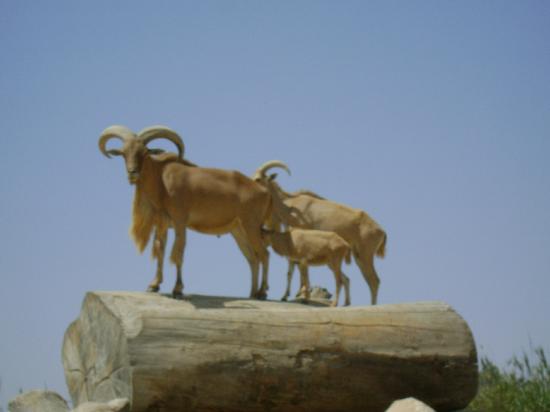
Please photograph the Egyptian wildlife and then upload to the site so we can share the beauty of nature in Sinai and Egypt round the globe.


Project Noah

Tuesday, January 22, 2013

Donate Blood in Egypt

There is ALWAYS a desperate shortage of blood in Egypt.


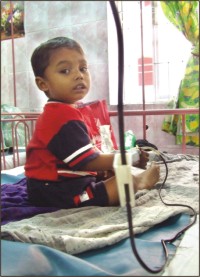
Please take the time to register so that Law Andak Dam can keep you on their database and match you to individuals requiring urgent blood transfusions like children and cancer patients.

Once registered, matching recipients will contact you to arrange your donation to their friend or relative in need.

You can register for their database here.

Thank you

 Law Andak Dam link


Tuesday, January 15, 2013

Buying Real Estate in Sinai NEW LAW

New ownership regulations in Sinai

New ownership regulations in Sinai are worrying for manyA series of recent changes in the regulation of land and property ownership in Sinai are said to protect national security, but to the foreign residents and dual nationals of the area, the changes are disconcerting and potentially economically damaging.
It all started with Law 14 and its implementing statute, which were published last year in the Official Gazette in January and September, respectively. The law restricts land and property ownership in the area to Egyptians who hold no other nationality, and who are born to Egyptian parents.
Ownership for legal entities is limited to corporations whose capital is wholly owned by Egyptians under the law. The law further restricts usufruct rights to 30 years, extendable to a maximum of 50 years if approved by the authorities, for foreigners.
Then, Defense Minister Abdel Fattah al-Sisi in December, through Law 203/2012, banned the private ownership, rental and use of nearly all land in the span of the five kilometers west of the eastern border with Gaza and Israel, with the exception of Rafah town. The law also bans the private ownership, rental and use of land on islands, protectorates and archaeological sites in the Red Sea Governorate.
South Sinai Governor Khaled Fouda told Al-Masry Al-Youm in November 2011 that the law seeks to allow land ownership while safeguarding national security.
These regulations are the latest in a series of legal measures addressing land and property ownership in the peninsula.
In April 2005, then-Prime Minister Ahmed Nazif passed a decree restricting the right of non-Egyptians to 99 years usufruct. A second decree in 2007 restricted the rights of Egyptian investors to 99 years usufruct.
Political implications
With regard to Law 203, the ban on private ownership, use or rent of borderline land in Sinai is “because of the military importance of this region as a border line,” a military spokesperson told Turkish news agency Anadolu last month.
The decree should be taken at “face value” as a counter-terrorism measure taken in the light of the attacks on soldiers, armed gangs incursions into Israel from Egypt and tunnel activity, says Issandr El Amrani, a writer on Middle East affairs who blogs on the Arabist, a widely-read site covering regional affairs.
Several attacks on security targets and ongoing border infiltrations have been facets of the uncontrolled peninsula, especially following the uprising that toppled Hosni Mubarak.
“It is a straightforward prevention of anything happening close to the border. The border is a very sensitive, possible flashpoint,” Amrani adds.
“There is tremendous pressure on Egypt to ensure that the area is under control. If something happened there it could escalate very quickly,” he says.
The military ban comes following and in contrast with earlier officials talk about the possibility of opening a free trade zone between Gaza and Egypt to encourage economic ties and cut down on the thriving tunnel economy.
Meanwhile, some Bedouin leaders voiced their rejection of the decision, especially because the ownership in the five-kilometer zone consists mostly of Bedouin tribesmen. Ibrahim al-Meniei, head of the Sinai Tribes Union, told Al-Masry Al-Youm that the tribes have given the government a deadline of 30 January to reverse the decision.
Economic implications
Law 14, lawyer Zeiad Yehia suggests, had a “dramatic” effect on the real estate market in Sharm el-Sheikh, where foreign investment is a key player.
The implementing statute passed in September “added to the suffering of the Sinai real estate market.”
“Foreign investment in the Sinai Peninsula, including Sharm el-Sheikh and Dahab city has ceased completely, and now millions of Egyptians are starting to suffer economically,” Yehia says.
The law has prompted panicked reactions from existing landowners in Sinai. Of particular concern was Article 8 of the implementing statute, which states that any Egyptian who acquires a second nationality must sell his land or property to single-nationality Egyptians born to Egyptian parents “within six months of the date of application of these regulations.”
The unclear wording of this provision initially prompted concern that the law would be applied retroactively, and that dual national Egyptians who purchased their property before the passage of the law would be obliged to sell up.
Article 2 of the laws preamble states, however, that the law and its implementing statute applies only to activities and projects “still under construction,” and that existing projects are subject to the law under which they were established until the expiry of their terms.
State officials such as Fouda and General Shawky Rashwan, head of the Sinai Development Authority, have also stated that the law would not be applied retroactively.
Meanwhile, Nader Sharqawy, a writer and member of the Free Egyptians Party who has lived in Sharm el-Sheikh for 20 years, says that after a meeting with General Tareq Saad Eddin, head of the Tourism Development Authority, Sinai landowners and investors were given verbal assurances that the law is not retroactive and that the prime minister is considering freezing the law.
Nationalist sentiments
But dual national Egyptian property owners remain critical of the distinction made in the law between single and dual national Egyptian citizens, and the repercussions it will have in inheritance matters.
Murad Mikhail, together with other dual national residents of Sinai, began the “Ana Masry Gedan” (“Im Very Egyptian”) Coalition in response to the law.
The coalition has held meetings with officials during which property owners, investors and others sought clarity about such issues as dual national rights and retroactivity under the law.
Mikhail, whose mother is German, says he “will never accept the law.”
“My family has served this country for 50 or 60 years. With this law, they took away my identity and I will never accept this, even if I lose everything,” Mikhail says.
Hamdy Samy, an Egyptian-Belgian dual national who runs a search-and-rescue service in Sharm el-Sheikh, moved from Europe to Sinai in 1999 because he felt “reassured” about investing in the area.
“When I read the law I felt humiliated. I feel Egyptian and love my country, and youre telling me that because my mother is Belgian, you categorize me as being less than a pure Egyptian,” Samy says.
Samy is of the view that the law, which he describes as “racist,” was passed to stop Israelis obtaining land through mixed marriages or to allow the government access to land at cheap rates.
Investors and workers rights groups in South Sinai have sent a legal memo authored by lawyer Mamdouh Mostafa to Saad Eddin in which they state that Law 14 flouts both the principle of equality enshrined in the constitution and Egyptian nationality law, which does not distinguish between single and dual national Egyptian citizens.
The memo also points out that the law discriminates against dual national Egyptians in the issue of inheritance by forcing them to sell any land or property bequeathed to them, in violation of the civil code.
The memo recommends that dual nationals be treated like single nationality Egyptians, and that they be allowed to inherit property and land.
While the right of dual nationals to inherit land is not explicitly stated in the law, Article 2 states that, where land or property has devolved to non-Egyptians by way of inheritance, the heirs must sell it to a single national Egyptian with two Egyptian parents within six months.
“Are Egyptians who have another nationality not Egyptian? There are deliberate efforts to falsify facts. Were not talking about Egyptians who hold another nationality, were talking about non-Egyptians. The text is clear,” Rashwan says, giving the example of an Egyptian married to a foreigner: When the Egyptian dies, his children would be allowed to inherit his property, but not his wife.
The case is different, however, when a single national Egyptian landowner in Sinai acquires another nationality since the coming into effect of the law.
“He has the right to usufruct. He can give up his other nationality — why does he want it? ... You have to take into account that the other nationality could be from the East or West, or even from neighboring countries — and you know what Im talking about. Obtaining a second nationality is a matter of volition,” Rashwan says.
On the matter of dual national Egyptians born to one foreign parent who are denied the right to own land in Sinai, unlike their single nationality counterparts, Rashwan asserts that there exists a similar system in other countries where land ownership is restricted to usufruct in such cases.
Yehia suggests that although the aim of the law is to protect Sinai land, “that protection has gone too far...and instead destroys the very core of the Egyptian real estate foreign market in the region and the dreams of millions of Egyptians for a better life.”

link

Friday, January 11, 2013

Desert Rose

By Sting and Cheb Mami


New Year 2013 Bedouin tribes camel race

Camel race between between the Muzeina and Tarabeen Bedouin tribes at Wadi Zalaga, 50 km from Nuweiba, South Sinai, 10 January 2013.

Sunday, November 25, 2012

Convert Salt Water into Drinking Water With Solar Oven

 Great idea for the people on the coastal areas of Egypt like Sinai and North Coast!


Whenever designer Gabriele Diamanti traveled abroad, he encountered a problem common to all developing countries – the lack of access to safe drinking water.

This inspired him to come with a device that would use easy-to-find, local resources to convert salt water into freshwater (drinking water). His invention was a solar oven, a household product, developed to utilize a resource that is available in plenty – sunshine!

Called Eliodomestico, the solar oven is intended to bring gallons of drinking water to economically backward families at no operating cost. The technology behind the oven is very simple wherein you fill the boiler section with salty water and fasten the cap. Very strong sunlight generates enough heat to boil the water, producing steam which is forced down the pipe condensing into the collection lid. The collection lid is shaped to be carried on a person’s head, a popular method of transporting goods in developing countries.


The Eliodomestico delivers 5 liters of fresh drinking water everyday. It is very simple to produce and maintain as it requires no electricity, no filters and has no adverse impact on the environment. Diamanti’s project won a Core 77 Design award and was a finalist at the Prix Emile Hermes competition awarding sustainable design innovation. He has open sourced the design and made it available to everyone who wants to modify and upgrade it.

Link

Wednesday, November 14, 2012

An Organic Farm Springs Up in Sinai


best friends, safari trek, bedouin, eco farm, organic farm, wadi marawan, egypt, sinaiThe Wadi Marawan Organic Farm is a new project by the ‘Best Friends Safari’ that guides tour groups in Egypt

Located at the terraces of Panorama Mountain Camp, the Wadi Marawan Organic Farm is a veritable paradise in the middle of the Sinai Peninsula. Over 4,000 sq. metres of land is planted with vegetables and fruit trees that organisers hope visitors will soon be able to sample at the Panorama Restaurant in Dahab, Sinai.

The Best Friends Safari group, which leads desert treks and Bedouin evenings and has over twenty years of tour guiding experience, provides a sustainable and environmental mountain camp for guests and volunteers.


Kasia Starosta, who got in touch with Green Prophet, explains that the group behind the project are a pretty international bunch. As well as making the most of Egyptian farming, they have a British member providing technical support, a French member providing solar solutions as well as her Polish passion for sustainability, volunteering and development.

“We are also involved in developing the programme for gathering environmental ideas for Egypt,” she added.

The Panorama Mountain Camp area has space for tents, basic facilities and stunning views of the city of Dahab, Lagoona and the Gulf of Aqaba.

The team is also busy building 10 ecological mountain houses that will be constructed out of seaside stones.

The Best Friends Safari company organizes safaris from one day/one night trips to 1-2 weeks visiting places such as the White Canyon, Coloured Canyon, Sinai Oasis, Canyon Arada, Sarabait Al Chadim, Moses Mountain, Dolphin-Beach, St. Catharine Monastery, Ras Abu Galum National Park area, Nawamis with the Roman houses, National Park of Ras Mohammed and many others including unknown Bedouin routes.

Link

Tuesday, November 6, 2012

Egypts nation dish Koshari origins and recipe

The national dish found in any street in Egypt called koshari was actually brought by the British from India to Egypt.
The Indians called it Kushari.

The Indian version contains rice and lentils.

Egypt added small macaroni and called it Koshari.

The British added smoked fish and boiled egg to it and call it Kedgeree.

                                                                  Bowl of Egyptian Koshari

Recipe if you want to make it:

You will need 6 pans!!!

Pan 1: Fry sliced onions till crispy and drain on paper towel

Pan 2: Boil hummus(Chick peas) till soft and drain

Pan 3: Boil brown lentils till soft and drain

Pan 4: Fry a handful of vermicelli pasta in a little oil till medium brown colour, then add 500gr of washed round rice ( not basmati ) and cook till water absorbed

Pan 5: Break around 20 spaghetti strands into 1 inch pieces and add to 500gr of small, short macaroni pasta and cook till al dente.

Pan 6: Liquidize 1 small onion and 4 cloves of garlic and 6 large tomatoes and 1 large tablespoon of tomato paste then pour this into the pan with 50mls of oil and 500mls of water and simmer gently till cooked into a pasta sauce.


Assembly:


Take bowl and put 1 ladle of rice mixture, one ladle of pasta mixture, top with brown lentils and chick peas and pour over some of the tomato sauce and garnish with some of the fried onions.

Viola
Koshari Egyptian style !

Saturday, November 3, 2012

Facebook users help needed

To everyone on Facebook  can you please click 'like' on the link to page below and share with your contacts.


The page is highlighting Egypts Traffic Violations and you can post your own photos of traffic violations you witness on Egypts road as an awareness campaign.


Please click 'like' on this page


Tuesday, October 30, 2012

Egyptians will now OWN land in Sinai!

Residents of Egyptian Sinai will finally enjoy the right to own land in the peninsula after Prime Minister Hisham Qandil issued a decision laying out purchase procedures for would-be local landowners, Egypt's official news agency MENA reported on Monday.


Qandil stated that all those applying to purchase land plots in Sinai must have two documents: proof that they do not have a second nationality, and a certificate confirming that both parents are Egyptian.

The prime minister added that both Egyptian individuals and corporations would be eligible to own Sinai land, noting that purchases would be done through public bids.
Foreign corporations eying investment projects in Sinai, meanwhile, will be granted contracts on a usufruct basis, Qandil said.


During the era of ousted president Hosni Mubarak, Sinai-based Egyptians and Bedouin tribesmen had campaigned for the amendment of existing laws banning them from land ownership in Sinai for ostensible "security" reasons since Egypt regained the peninsula from Israel in 1981.

According to Qandil, the move will serve to boost development in Sinai by encouraging local investors who will be offered generous facilities and easy-to-meet terms and conditions.

Link

Egypts first HIGH SPEED TRAIN link plans


The Egyptian government has agreed to terms and conditions for the country's first high-speed train project, to be formally announced to international and domestic engineering companies within days, state-run daily Al-Ahram reported Monday.
The total cost of the project has yet to be set.


Transportation Minister Mohamed Rashad El-Mateeny said the first phase of the planned train project would link Alexandria with 6 October City on the outskirts of Cairo.


Al-Meteeny added that the project would help Egypt's struggling tourist industry and help meet the rapid rise of passenger numbers, especially those traveling to and from Upper Egypt.


link

Sunday, October 28, 2012

Africa Park visit!

If you have nothing to do one day why not spend the day at Africa Park Egypts one and only Safari Park.


It's a great day out for the family and kids.

It's on the Cairo/Alex Desert Road about 65 km before you reach Alexandria from Cairo. It's also a nice drive out there along the road passing hundreds of fruit orchards and farms and has many rest stops to get refreshments.


The Africa Park is well signposted with a huge road sign and is on the left side of the road if you are driving from Cairo side. It has huge elephant and giraffe statues outside it.

Go past the statues on your left about 1km and you will see the sign and U turn.

You go through a small gatehouse and pay there and are given a colourful map and park brochure and pay here. Then you drive over a small river on a wooden bridge into the park itself.


All the animals are out in the open and the keepers encourage you to feed them by bringing you handfuls of corn and fruits etc and you get to feed them (free) by hand. It's a lovely experience to get up close and feed them. The keepers are very professional unlike Giza Zoo and will not hassle you for tips but of course each should be given a small tip just for the lovely experience they give you.

You drive in your car through the different settings and can get out and feed the animals if you want or stay in the car.

Price: 250le per car (no matter how many passengers)
Includes trip around the park and a boat trip on the lake to Monkey Island and Crocodiles.

Opening times: 0900 - dusk every day including holidays

Tele: 0122-3600967, 0100-1175098, 0100-4712576

Facilities: Clean toilets, Restaurant and Grill, Ice Cream kiosk, Hotel on the lake with swimming pools and hot tubs, car cleaning service.

Hotel:  850le - 1200le Double room -Suite (includes fishing rods to fish in the lake, pets are welcome)

Animals: Lions, Tigers, Gazelle, Hippo, Kangaroos, Bear, Crocodiles, Bats, Snakes, Hedgehogs, Monitor Lizards, Vultures, Eagles, Chameleon, Parrots, Turtles, Tortoise, Peacocks, Ducks, Cappuchin Monkeys, Gibbon Monkeys, Baboon Monkeys, Chimpanzee Monkeys, Cheetah, Owl, Ostrich, Toucan, Porcupine, Dubb, Marmosets .....


Warning: You have the option to drive through the baboons. It's advisable to close the windows and doors and remove car aerials before driving through as they all climb on the roof and bonnet of the car and try to get food from you. They will make your car dirty with the sand but there is a car cleaner who will wash your car for a small sum at the car park beside the Grill and Lake.


Advice: You don't have to take food for the animals as the keepers provide the food for free to you to maintain the animals carefully balanced diet.


HELP EGYPTS FARMERS BY MAKING A NOISE!

#EgyFarmers : They Only want Water 


Ahram Online’s Nada El Kouny wrote extremely alarming report about the trouble small scale farmers in Fayoum governorate are currently facing. Here is a video report with translation showing the problem of these farmers.

These farmers do not want anything except water , they do not want money or another demands except water for their own land. This is so simple. I think President Morsi as a man who originated from a family of farmers knows exactly what these people have been through in the past ten years.
How many farmers in Egypt want only water for their land ?? I fear too many. Please make some noise for their farmers as much you can. Already I can not believe this happens in Fayoum .
Now I am begging bloggers and citizen journalists around Egypt to go and to do similar reports about the problems they are facing in their governorates.

Zeinobia Blog

Friday, October 26, 2012

Bozoor Balady Seed Bombing in Egypt (update)


Dropping seed bombs


(previous post)

link to previous seed bomb post


Environmentalists, activists and bystanders gathered Saturday at various locations around Cairo and Alexandria to join a seed bombing campaign known as “Bozoor Baladi” (Seeds of My Country).


Seed bombing is considered a political act of “guerilla gardening” in which small, tightly compacted balls of clay, fertilizer and seeds are thrown into public spaces and parks to create awareness about a particular agricultural cause, establish dialogue, and reclaim and beautify public spaces in the process.
These seed balls sprout very quickly — some had already begun sprouting before the march had begun — making it a very efficient technique to create awareness and dialogue with skeptical onlookers.

In Egypt, the particular cause was the advocacy of using local, organic seeds rather than imported, genetically modified seeds, which are both expensive and yield harmful and poor crops. 

Access to quality, low-priced, organic local seeds has become one of the most pressing issues facing farmers over the past years.

A native seed is one that has been growing in a specific place for a very long time and that has adapted very well to this specific environment. Industrialized agriculture, and its monoculture ideal, has introduced all over the world limited varieties of standardized seeds produced by a handful of multinationals.


These seeds have gradually replaced the local, organic seeds that farmers had perfected over generations, which has caused a series of problems. First, this is foreign seed and, in order to adapt to its new environment, it needs to be sprayed with large amounts of fertilizers and pesticides to resist and grow. Second, these seeds are patented, meaning they are owned by these companies, which consequently have the power to demand royalties from farmers and control the market. In Egypt, organic native seeds have become a rarity, only to be found in remote small farms where farmers have been saving their seeds for years.

Various environmental and agricultural NGOs, such as Nawaya, Greenpeace, 350.org and Nabta, initiated the campaign. They had been hosting workshops for several weeks to create awareness about the project and create the seed balls.
“We’re calling for a reform in agricultural policy through the engagement of the street in opening the discussion about these issues, because of a lack of discussion about it in the public sphere,” says Greenpeace communications officer Hoda Baraka, who thinks hands-on seed bombing with public engagement will have a more positive effect than isolated, abstract, environmental lectures.


Reem Saad, an American University in Cairo professor of social anthropology with a strong interest in rural Egypt, also joined the campaign, advocating the need to create awareness about food sovereignty rather than simply food security.
“Food security really relates to just having enough to feed people, but food sovereignty is an integrated concept — a comprehensive approach that emphasizes not just the quantity of food, but the quality, and the work and the effort of the producers themselves,” she says, adding that the seed “crisis” is at the heart of the destruction of food sovereignty in Egypt.

Between 8,000 to 10,000 seed balls containing seeds of bitter oranges, peas, wheat and barley were prepared for Saturday’s event, organizers say.

Four specific locations were marched through and seed bombed last weekend: three in Cairo — downtown, Heliopolis and Maadi — and one in Alexandria, starting outside the Cairo train station.

Organizers and participants arrived with wheelbarrows and bags full of thousands of seed balls, as well as flyers and stickers to promote the cause. Marches started at about 2 pm and were made from square to square, as seed balls were thrown apace, interrupted only by continual discussions with curious bystanders.
Having joined the downtown march, which moved from Opera Square in Zamalek to Abdeen Square downtown, passers-by, homeless children and police officers instantly congregated around the growing crowd, trying to understand what was going on.

“Is this a protest against the Brotherhood?” and “Are you going to throw those rocks at people?” were among some of the initial questions floating around.

However, after organizers explained the cause behind the march and event, supported by the chant, “Enta Masri! Tezra Masri!” (“You’re Egyptian! Plant Egyptian!”), onlookers and passers-by became some of the most active marchers.
Several young boys instantly grabbed a wheelbarrow and ran around, handing out flyers and throwing seed balls into public spaces.
“We weren’t doing anything and had nothing else to do but hang out on the street. Why not join in something that is fun and active like this to promote Egypt?” one of the boys, Mahmoud, said.

Many others asked if they could take bunches of seeds to use in their areas, rooftop gardens or to give to farming relatives.

“My brother has a small farm, so I thought I would take some to him; let him try them and see what he thinks,” said one man who was watching the campaign unfold while sitting with his wife.

As the march moved into Tahrir Square, more people continued to gather. An inquisitive police officer even praised the initiative, ironically stating how for a long time he’d been thinking about growing corn in the square to make better use of the space.
“Just don’t grow things too high so we can still see over and monitor the square,” he said, before returning to direct traffic.

Public reception, eventually, was overwhemingly positive. “I never knew you could grow food with a simple ball, I always thought you had to plant all the items separately at different times,” said Khaled, one impressed onlooker.
Meanwhile, a worker — separate from the campaign — was simultaneously watering Tahrir Square with a hose. “At least now I have something to water and watch grow,” he said with a smile.
Reports from Alexandria, Maadi and Heliopolis were also extremely positive and similar to the downtown march; however, the turnout was reported to be slightly smaller.

Gameela Ismail, journalist-turned-political activist, also attended the downtown march in support, telling reporters that seed bombing is a means of protesting by example about crucial issues that aren’t given enough attention.
In terms of the seed bombing campaign creating awareness and discussions about the seed issues facing Egypt, Baraka said Saturday’s seed bombing were not a one-time event and there would be follow-ups.

She said organizers have already been contacted by residents of various governorates who also want to host seed bombing events in their own areas.
“The media is also now on board and interested to talk to us which means the dialogue has been established, already making the event something of a success,” she said.

Link 

Wednesday, October 24, 2012

USD450m Turkish bid to build power plant in Sinai

USD450m Turkish bid to build power plant in Sinai


By Alaa El Taweel The Egyptian industry ministry's Industrial Development Authority (IDA) has received a USD 450 million bid from a Turkish investor to establish a power plant in Jabal Al Mahghara, Northern Sinai, using as feedstock coal extracted from the mountains, a top IDA executive told Zawya. 
 
The plant will have a capacity to produce 200 MW, which will go toward resolving the power shortage in the area, said IDA chief executive Ismail Al-Nagdi.
Egypt produces 23,000 MW of electricity annually, while the demand exceeds 25,000 MW. This forces the National Grid to effect an alternating blackout across different Egyptian governorates.


The project will be implemented as a public-private partnership, Al- Nagdi said, adding that the generated capacity from the plant will cover the needs of the hotel facilities in Sinai that includes the largest amount of hotel services in Egypt, as Sharm El Sheikh, Nuweiba and Taba cities abound in hotels and resorts.

Establishing power stations according to the PPP scheme may help eliminate the blackouts across the country that hit several regions last summer, said Atter Hannoura, the head of the PPP Central Unit at the finance ministry.

Tuesday, October 23, 2012

Oyun Musa (update)

Since the Egyptian Revolution the Oyun Musa Fortified Firing Position

Link to previous posts

Has undergone a renovation by the Egyptian Military.

It's a good tourist destination and should be added to your itinerary for an hour or so visit where the army will give you a tour.

They have added a Rest Stop cafe which sits at the entrance on the Cairo/Sharm Rd and is easily seen from the road.

Enjoy your visit


Saturday, October 20, 2012

Join! Help! Share!and Promote Bozoor Balady!!!

Great initiative called 'Bozoor balady' who are seed bombing Cairo today 20th October!

Please join, like and share this great awareness campaign for nutrition and agriculture in Egypt !

Twitter hashtag

Facebook page


                                              Kids seed bombing a street in Cairo


Volunteers distributing baskets of seeds to throw in Cairo open areas

                                               Seed Bombers in Tahrir Square

Sunday, October 7, 2012

Foreigners getting married in Egypt (process)

Updated 1 October 2012

Civil Marriages in Egypt

THE FOLLOWING NOTES ARE NOT COMPREHENSIVE AND ARE INTENDED ONLY AS A GUIDE. FURTHER ADVICE SHOULD BE SOUGHT FROM THE OFFICE OF THE NOTARY PUBLIC OR A LAWYER.
The onus of ensuring that you are free to contract a marriage rests with the parties themselves. Consular Officers cannot issue any document, which will facilitate a marriage, which will not be valid in Britain. Additional Documentation may be requested in order to satisfy the Consular Officer to issue a Statutory Declaration.
 

BRITISH COUPLES
British couples wishing to marry in Cairo have to satisfy the Egyptian authorities that they are free to marry.
They should, therefore:
(1) Come to the Consular Section of the Embassy in Cairo to make statutory declarations, before a consular officer, that they are free to marry.
The documents required by the consular officer are the following:
• Passports as proof of identity
• Documentary evidence of the termination of any former marriage(s). For example, divorce (decree absolute) certificates and change of name Deed or, if appropriate the death certificate of a deceased spouse   see also further advice below.
• Consular fees no 2(i) (Sterling £ 45.00) and 4 (Sterling £ 55.00) are payable in Egyptian Pounds at the current rate of exchange for each declaration.
PLEASE NOTE ORIGINAL DOCUMENTS MUST BE PRODUCED  PHOTOCOPIES CAN NOT BE ACCEPTED
(2) Statutory declarations have to be taken to the Ministry of Foreign Affairs at Ahmed Orabi Street, Mohandessin, Giza (Tel: 03 33033450), for the consular officer's signature and stamp to be legalised (the fee is approximately 22 Egyptian pounds per document).
(3) The couple can then go to the Notary Public's Office at Ministry of Justice Annex, Lazoghly Square, 4th Floor, Cairo, for a civil marriage.
The documents required by the Notary Public Office are the following:
• Passports
• 5 photographs each (size 4x6)
• Evidence of termination of any previous marriage or change of name (as described above)
• 2 male witnesses (with proof of identity)
• A registered interpreter (the proceedings will be conducted in Arabic)
• Medical certificates for both parties from a government hospital to the effect that both parties are qualified physically for marriage
• A stamp from the post office called the family rights stamp
• 2 photocopies of all documents provided
MARRYING AN EGYPTIAN/NON BRITISH MAN OR WOMAN
When a British citizen wishes to marry an Egyptian man or woman.
(1) The British party only needs to make a statutory declaration at the Embassy.
The documents required by the Consular Officer are the following:
• Passports as proof of identity
• If appropriate, documentary evidence of the termination of any former marriages - decree absolute certificates and change of name deed. If appropriate, the death certificate of a deceased spouse
• The Egyptian party will also need to present his/her current Egyptian ID card and
• show that they are not in any existing marriage i.e. are single, widowed or divorced. In Egypt there are varying degrees or types of divorce. The only one acceptable to a consular officer is an irrevocable divorce. Where either party has been married more than once they must show termination of each marriage.
• Consular fees no 2(i) (Sterling £ 45.00) and 4 (Sterling £ 55.00) payable in Egyptian Pounds.
PLEASE NOTE ORIGINAL DOCUMENTS MUST BE PRODUCED  PHOTOCOPIES CAN NOT BE ACCEPTED
(2) The statutory declaration has to be taken to the Ministry of Foreign Affairs at Ahmed Orabi Street, Mohandessin, Giza (Tel: 03 33033450), for the consular officer's signature and stamp to be legalised (the fee is approximately 22 Egyptian pounds per document).
(3) The couple can then go to the Notary Public's Office at Ministry of Justice Annex, Lazoghly Square, 4th Floor, Cairo, for a civil marriage.
The documents required by the Egyptian civil registry office are as follows:
• Passports (The Egyptian party will also need to present his/her current Egyptian ID card)
• 5 photographs each (size 4x6)
• Evidence of termination of any previous marriage or change of name
• 2 male witnesses (with proof of identity),
• A registered interpreter (the proceedings will be conducted in Arabic)
• Medical certificates for both parties from a government hospital to the effect that both parties are qualified physically for marriage
• A stamp from the post office called the family rights stamp
• 2 photocopies of all documents provided
The above proceedings may normally be completed within 2 or 3 working days (i.e. not Fridays or Saturdays or public holidays). There is no residency requirement but the parties must have valid immigration conditions in their passports.
DIVORCED OR WIDOWED WOMEN
Under the Egyptian law, a divorced or widowed woman   of whatever religion or nationality   must observe a period of waiting (known as the Eddah) before she may marry again. Hence, a Notary Public, before performing a civil marriage, is required to satisfy himself that a period of at least 3 months has elapsed in the case of a divorced woman since the termination of the previous marriage. In the case of a pregnant divorcee, however, the period is terminated by the birth of the child. A widow wishing to marry again must observe a minimum period of waiting of 4 months and 10 days.
NOTE: Notary Public Offices in Egypt may refuse to accept the validity of a divorce between a woman and a Muslim man when the marriage has been terminated by a non Muslim authority, e.g. a British court. Those affected should seek legal advice.
VALIDITY OF FOREIGN LAW MARRIAGES
The validity under English law of foreign law marriages is not a matter on which the Embassy can give authoritative advice. It is a matter for British courts to decide. Should you wish further advice on this point, or any other point of law, a solicitor should be consulted.
DEPOSIT OF FOREIGN LAW MARRIAGE CERTIFICATES
Once the Egyptian marriage has taken place, the original Arabic marriage certificate and an English translation (with no corrections) may be deposited with the Embassy by the British party or parties and, on payment of Consular Fee No 15 (Sterling £ 35), the documents are forwarded to the Registrar General in the United Kingdom so that certified copies can subsequently be obtained in the United Kingdom. It should be clearly understood that there is no legal obligation to have a marriage recorded in the United Kingdom in this manner. The parties may take advantage of these facilities if they consider that it would serve some useful purpose to have their marriage recorded in the United Kingdom, but neither the formal nor the essential validity in English law of a marriage contracted in a foreign country is in any way affected by its having been, or not having been, thus recorded.
CONSULAR FEES
All Consular Fees are collected in Egyptian currency at the prevailing Consular Rate of Exchange.
IN LINE WITH THE EGYPTIAN REGULATIONS, THE STATUTORY DECLARATION IS ONLY VALID FOR ONE MONTH FROM THE DATE OF ISSUE.
Applications to be handed during our opening hours Sunday-Thursday from 10:00 to 13:00 hrs
Collections will be scheduled on Wednesdays between 10:00 to 12:00 hrs


Consular Section
British Embassy
Ahmed Ragheb Street
Garden City
Cairo
www.ukinegypt.fco.gov.uk/en