Showing posts with label bedouin. Show all posts
Showing posts with label bedouin. Show all posts
Friday, January 11, 2013
New Year 2013 Bedouin tribes camel race
Camel race between between the Muzeina and Tarabeen Bedouin tribes at
Wadi Zalaga, 50 km from Nuweiba, South Sinai, 10 January 2013.


Tuesday, April 17, 2012
St Catherines bedouin medicinal herb growers
All around Saint Catherine, in tiny spring-fed gardens, the Jabaliya Bedouin are cultivating medicinal plants. Just 10 years ago this was unheard of. Then in 2003, the MPCP (Medicinal Plants Conservation Project) began surveying the mountains for medicinal plants.
By 2005 word had spread that the project’s micro-financing offshoot, the MPA (Medicinal Plants Association), with its dark-roofed greenhouses down in Saint Catherine, was offering good money for thyme, rosa arabica, anise and oregano.
What had been worthless goat fodder growing between granite and basalt was now a cash crop. It could even be more lucrative than marijuana, and maybe even more than opium.

Ahmed Saleh is an herbalist. He also runs the MPA. Three of us are sitting in his low-ceiling living room in Saint Catherine, South Sinai, while Saleh wordlessly mixes a yellow powder concoction with store-bought honey. The mustard-yellow paste goes into small glass jars.

“This one is going to Israel,” he says, holding a finished product to the light. “A man has ordered ten.”
But his friend Soliman Mahmoud is doing most of the talking. Saleh has asked him to drop by for tea and explain to the reporter the healing powers of the local plants. The living room’s mood has turned fervent.
“Some people believe easily,” says Mahmoud, who works as a guide at Saint Catherine Monastery. “But not me. I didn’t believe what people said about medicinal plants at first.
“Then my child was sick,” he continues. “He was two years old and four months. I took him to the doctor and they gave him antibiotic injections. But after 10 days he would be sick again. Eventually I did not have enough money and I was going to sell my car and take my child to the big hospital in Cairo. The local doctor gave us a referral to a specialist.”

As it happened, the night before he left for Cairo he visited Saleh for dinner. Saleh caught wind of his plans and urged him to cancel the doctor’s appointment. He did. Then Saleh gave him a jar of the mustard-yellow paste. Mahmoud fed it to his son. The boy’s health improved dramatically overnight. Cynical Mahmoud became a believer.
Sinai, says Saleh, has 472 plant species — and more than 100 are used as medicine. Forty-two of these are endangered and 14 are endemic.
The harsh conditions have favored species that evolve to specialize in limited, niche conditions. As a result, it is one of Egypt’s most bio-diverse areas.
Today there are 60 Bedouin gardens growing plants for the MPA, Saleh says. The association fosters seedlings in Saint Catherine, and then distributes the young plants to the surrounding gardens. Some are nearby, others are working far-flung wells. The plants are then harvested and processed by a team of female MPA employees in Saint Catherine. They are blended, packaged, branded and marketed.
A 20-gram tea blend of rosemary, peppermint and other herbs retails for LE20, while 400 grams of the raw plant stuff costs about LE25 — a 1,600 percent mark-up. The 250-gram jar of mustard-yellow paste — containing anise, ginger, rosemary, oregano and 10 other ingredients — is about LE100. Most of the product is sold domestically, though some will go to neighboring Gulf countries and Europe.
The MPA takes a 10 percent commission of the profit and the rest goes to the growers. Medicinal herbs are a rare good news story for the Sinai economy. Last winter’s rains failed, a late frost scorched the almond blossoms and tourism numbers are way down. Mahmoud says he is finding it hard to support his family on his earnings as a tour guide. They may move to Suez or somewhere else on the coast, where maybe they can catch and sell fish.
You don’t have to believe in the herbs’ healing powers to have faith in the business model.
But according to Saleh and Mahmoud, there is also plenty of strong anecdotal evidence in favor of swapping aspirin for an herbal-brewed tea, or Panadol for the massage oil.
“Many in Egypt have colon problems because of their diet,” says Saleh. “They eat a lot of oil — falafel, shawarma, chips. The Bedouin also have lots of kidney problems and need dialysis.”
Saleh has prescriptions for eczema, hair loss, fish and lactose allergies, immune deficiency, high salt levels and rheumatism. There’s even an herbal Viagra. Tiny dark jars of 40 blended oils, sandwich bags of powders and salves of royal jelly pile into the dark corners of the living room. They will be sold in the shop down the road. From starting life in remote mountain valleys, the herbs see out their days on a dresser in a dim Cairo bedroom, or lugged across the globe in a backpack.
The MPA parent project, the MPCP, was established with an 8 million-euro grant from the Global Environmental Facility — a UNDP-UNEP, World Bank environmental fund. It sought to graft Bedouin lore onto a Western micro-finance model — and to combine botanical textbook knowledge with Bedouin oral learning. In nine years of the project, feral donkeys have been trucked off to Giza Zoo, (apparently solving the donkey problem), abandoned orchards revived as herb farms, and the seeds of rare medicinal species deposited in the vaults of the Cairo gene bank.
And sometimes, under the MPCP greenhouse plastic, vanished strains have returned.
“The old people tell me that there used to be lots of herbs growing at a remote spot,” says Saleh. “So I go to these areas and find goat dung. Sometimes it’s up to 60 years old. I take the dung, water it and seeds grow. They can stay inside the dung for 100 years and grow again.”
In 2012, the MPCP was awarded the US$5,000 UNDP Equator Prize for its work in preserving genetic heritage.
But the seed funding will run out this June and the project will be turned over to the Environment Ministry. The MPCP will remain an NGO, says project manager Adel Soliman. Its 12 employees will keep their jobs.
The MPA, however, will remain independent from the government. Thanks to its share of profits, the offshoot is self-sustaining.
Tuesday, September 28, 2010
The Sinai Bedouin marginalized
By Ayman Mohyeldin and Adam Makary
The holiness of Sinai is indubitable.
Prophet Abraham was believed to have crossed it. Centuries later, the Prophet Moses spent his life there and it was on top of Mount Sinai where he was said to have received the Ten Commandments. The Bible documents the journey of Mary, Joseph and Jesus across the peninsula en route to the mainland. And in the Quran, Sinai is mentioned more than 10 times.
Yet these days, the area's spiritual significance is the only thing that Egyptian officials and the Bedouins who live there can agree on.
Marginalised
Throughout history it has been the land bridge between Asia, Africa and the sequential civilisations of the ancient world. Today, it has become a hotbed for clashes that no Egyptian government has been able to resolve since a landmark peace deal was signed between Egypt and Israel in 1979.
For decades, the Egyptian authorities and the Bedouins have been at bitter odds over their opposing takes on how to develop and govern the peninsula.
Human rights experts believe the conflict stems from a lack of economic incentives in the region, which forces some Bedouins to turn to illegal activities such as drug and human trafficking and the smuggling of goods and weapons across the border with Gaza.
"The problem also stems from the fact that there are services that Egyptians can enjoy, but Bedouins do not - and that comes in the form of proper healthcare, access to clean water and other socioeconomic rights they are not given" Heba Morayef, the Cairo officer for Human Right's Watch, says.
"And apart from the tourism industry there are no other opportunities made available."
Bedouins also complain that the government has marginalised them from modern Egyptian society. Today, many do not hold national ID cards and are more loyal to their tribal chiefs than the state.
Ziad Moussa, a political analyst with the al-Ahram Centre for Political and Strategic Studies, says: "The government does not take into account that they are dealing with a culturally different people, there is no consideration for their ethics and values in their dealings."
National pride
in video
Egypt's Bedouins cry foul
After Israel occupied the peninsula in the 1967 war, Egypt's national agenda revolved around regaining its lost territory.
Efforts to take back what was seized quickly became a symbol of national pride and in October 1973, Egypt launched a surprise attack on Israel with the aim of winning Sinai back. With the backing of Arab states, Egypt succeeded in doing so.
In 1978, the signing of the Camp David Peace Accords between Israel and Egypt marked the culmination of nearly 15 years of Egyptian military and diplomatic efforts. A landmark peace deal came one year later, but it was not until 1982 that Israeli forces fully withdrew from Sinai.
Once back in Egyptian hands, Sinai emerged as a new tourism hub in a country that was already generating billions of dollars in revenue from historic sites such as the Great Pyramids of Giza and the Valley of the Kings in Luxor. The southern-most tip of the peninsula, Sharm el-Sheikh, started to compete with other global seaside destinations.
Today, Sinai accounts for nearly one-third of the country's total tourism revenue.
Geopolitical significance
But aside from its economic significance, Sinai is also extremely important from a geopolitical standpoint.
To the west of the peninsula lies the Suez Canal, a vital waterway for global oil shipments and trade from Asia to Europe and beyond. To the north the Sinai shares a volatile border with Israel and the Gaza Strip, and to the east at a visible distance lay Jordan and Saudi Arabia, countries which are of strategic importance to both Egypt and the rest of the region.
Because of its decisive location the Sinai Peninsula plays a crucial role in maintaining stability in the region, but the lynch pin to keeping the Sinai stable is the relationship between the Egyptian government and the local Bedouin population who claim they have been largely overlooked in the development of Egypt's prized peninsula.
Ramadan, a south Sinai Bedouin who has been working as a tour guide since he was 16 years old, treks up Mount Sinai at least once a day. He says he would have preferred to become a doctor. But as a Bedouin, Ramadan could not dream of a job outside the tourism industry.
"First and foremost, we don't think of ourselves as Egyptian. We meet Egyptians and sometimes we don't even know how to relate. They're people of a different kind," Ramadan says.
Mosaad Abu Fagr, a Bedouin activist from north Sinai agrees, but says the disconnect comes from the government's neglect of the Bedouins' most basic needs.
"The Egyptian government does not offer us anything. Even our water is bad and our customs and tribal laws have been ruined so it's no wonder that many people here have turned into outlaws over the years. All of this is because of the absence of a real development plan that the government should have presented as soon as they regained Sinai."
Government sweep
Abu Fagr was released from jail in July after serving 30 months in prison for charges he denies.
"They put me with criminals, those accused of drug trafficking or theft, of criminal charges not political ones. They considered me responsible for all of Sinai's civil society struggles in 2007. They even put my colleagues in prison because of these events."
His release came after Habib el-Adly, Egypt's interior minister, held a series of meetings with Bedouin tribal elders in June in which both sides agreed to try to improve relations. In the weeks that followed, as a gesture of good faith Abu Fagr and at least 200 other Bedouin activists were released from jail.
Many of those released, including Abu Fagr, had been arrested on suspicion of terrorism following three major bomb attacks in Sinai between 2004 and 2006 in which over 150 people were killed and hundreds more wounded.
The Egyptian government blamed al-Qaeda, but it was widely believed that Bedouins helped smuggle the explosives used in the attacks across the peninsula.
The government responded by launching a massive sweep of the territory. It is estimated that 1,000 to 3,000 Bedouins are held in Egyptian jails. An additional 10,000 are wanted by the government on what activists say are trumped up or false charges, which has further aggravated relations between the two sides.
Yehya Abu Nusayra, a Bedouin activist, says he was arrested with Abu Fagr "for no reason".
"I have two sons who had to leave their high school education and work because I was not around to support them," he says.
Heavy-handed
Many political analysts say the government's heavy-handed approach to dealing with Bedouins who engage in illegal smuggling has been ineffective.
"There is a very weak state presence in Sinai despite the strong security presence. The only state presence in Sinai is a security state. You can't blame the Bedouins for not cooperating with an organ that oppresses them," says al-Ahram's Ziad Moussa.
Abu Fagr says that there are more than 13 police stations in north Sinai alone, making it one of the tightest security zones in Egypt.
To this day many Egyptians consider the traditional and modest Bedouin lifestyle to be primitive.
"The situation is a result of a profound lack of mutual understanding, it is not merely a matter of security, it's an ethnic minority issue," says Moussa.
That some Bedouins collaborated with the Israeli military during Israel's occupation has fuelled mistrust and fed a negative stereotype that persists to this day. But, many also worked as informants for Egyptian intelligence providing key information on Israeli positions and military movements.
The knowledge Bedouins have of the topography acquired over centuries of roaming the peninsula has given them an upper hand in navigating the Sinai's terrain, allowing them to move with ease across the mountainous border with Israel.
In recent years, Bedouins have becoming increasingly involved in the trafficking of African migrants into Israel. This has created a diplomatic crisis with Israel demanding Cairo do more to curb the flow of migrants. Egypt has responded by adopting a zero-tolerance policy against migrants passing through its borders which in turn has drawn strong condemnation from human rights organisations.
This year alone at least 28 migrants have been shot dead at the border, 24 by the border patrol and the others by their Bedouin smugglers.
Question of survival
However, Bedouins claim they are left with few alternative ways to make a living in a region sorely lacking economic opportunities and basic infrastructure.
"For the Bedouins, it's a question of survival, they have no choice but to turn to these illegal activities," says Moussa.
And while the government has poured millions into the development of south Sinai, development in the northern region has been slow and irregular.
But Mohamed Shousha, the governor of south Sinai, believes the peninsula is heading in the right direction.
"The people of Sinai, the Bedouins themselves, have entered partnerships in tourism. They have become part of the tourism industry, and once they have integrated into this industry they will protect it along with its interests," he says.
But Bedouins across the peninsula question the government's approach and say the benefits from Egypt's tourism industry are limited and cannot satisfy their hunger for real integration with the Egyptian people.
The need for Sinai's Bedouins and the Egyptian government to see eye-to-eye on more than Sinai's spiritual significance is becoming an increasingly urgent matter.
http://english.aljazeera.net/photo_galleries/middleeast/201092612153319304.html
The holiness of Sinai is indubitable.
Prophet Abraham was believed to have crossed it. Centuries later, the Prophet Moses spent his life there and it was on top of Mount Sinai where he was said to have received the Ten Commandments. The Bible documents the journey of Mary, Joseph and Jesus across the peninsula en route to the mainland. And in the Quran, Sinai is mentioned more than 10 times.
Yet these days, the area's spiritual significance is the only thing that Egyptian officials and the Bedouins who live there can agree on.
Marginalised
Throughout history it has been the land bridge between Asia, Africa and the sequential civilisations of the ancient world. Today, it has become a hotbed for clashes that no Egyptian government has been able to resolve since a landmark peace deal was signed between Egypt and Israel in 1979.
For decades, the Egyptian authorities and the Bedouins have been at bitter odds over their opposing takes on how to develop and govern the peninsula.
Human rights experts believe the conflict stems from a lack of economic incentives in the region, which forces some Bedouins to turn to illegal activities such as drug and human trafficking and the smuggling of goods and weapons across the border with Gaza.
"The problem also stems from the fact that there are services that Egyptians can enjoy, but Bedouins do not - and that comes in the form of proper healthcare, access to clean water and other socioeconomic rights they are not given" Heba Morayef, the Cairo officer for Human Right's Watch, says.
"And apart from the tourism industry there are no other opportunities made available."
Bedouins also complain that the government has marginalised them from modern Egyptian society. Today, many do not hold national ID cards and are more loyal to their tribal chiefs than the state.
Ziad Moussa, a political analyst with the al-Ahram Centre for Political and Strategic Studies, says: "The government does not take into account that they are dealing with a culturally different people, there is no consideration for their ethics and values in their dealings."
National pride
in video
Egypt's Bedouins cry foul
After Israel occupied the peninsula in the 1967 war, Egypt's national agenda revolved around regaining its lost territory.
Efforts to take back what was seized quickly became a symbol of national pride and in October 1973, Egypt launched a surprise attack on Israel with the aim of winning Sinai back. With the backing of Arab states, Egypt succeeded in doing so.
In 1978, the signing of the Camp David Peace Accords between Israel and Egypt marked the culmination of nearly 15 years of Egyptian military and diplomatic efforts. A landmark peace deal came one year later, but it was not until 1982 that Israeli forces fully withdrew from Sinai.
Once back in Egyptian hands, Sinai emerged as a new tourism hub in a country that was already generating billions of dollars in revenue from historic sites such as the Great Pyramids of Giza and the Valley of the Kings in Luxor. The southern-most tip of the peninsula, Sharm el-Sheikh, started to compete with other global seaside destinations.
Today, Sinai accounts for nearly one-third of the country's total tourism revenue.
Geopolitical significance
But aside from its economic significance, Sinai is also extremely important from a geopolitical standpoint.
To the west of the peninsula lies the Suez Canal, a vital waterway for global oil shipments and trade from Asia to Europe and beyond. To the north the Sinai shares a volatile border with Israel and the Gaza Strip, and to the east at a visible distance lay Jordan and Saudi Arabia, countries which are of strategic importance to both Egypt and the rest of the region.
Because of its decisive location the Sinai Peninsula plays a crucial role in maintaining stability in the region, but the lynch pin to keeping the Sinai stable is the relationship between the Egyptian government and the local Bedouin population who claim they have been largely overlooked in the development of Egypt's prized peninsula.
Ramadan, a south Sinai Bedouin who has been working as a tour guide since he was 16 years old, treks up Mount Sinai at least once a day. He says he would have preferred to become a doctor. But as a Bedouin, Ramadan could not dream of a job outside the tourism industry.
"First and foremost, we don't think of ourselves as Egyptian. We meet Egyptians and sometimes we don't even know how to relate. They're people of a different kind," Ramadan says.
Mosaad Abu Fagr, a Bedouin activist from north Sinai agrees, but says the disconnect comes from the government's neglect of the Bedouins' most basic needs.
"The Egyptian government does not offer us anything. Even our water is bad and our customs and tribal laws have been ruined so it's no wonder that many people here have turned into outlaws over the years. All of this is because of the absence of a real development plan that the government should have presented as soon as they regained Sinai."
Government sweep
Abu Fagr was released from jail in July after serving 30 months in prison for charges he denies.
"They put me with criminals, those accused of drug trafficking or theft, of criminal charges not political ones. They considered me responsible for all of Sinai's civil society struggles in 2007. They even put my colleagues in prison because of these events."
His release came after Habib el-Adly, Egypt's interior minister, held a series of meetings with Bedouin tribal elders in June in which both sides agreed to try to improve relations. In the weeks that followed, as a gesture of good faith Abu Fagr and at least 200 other Bedouin activists were released from jail.
Many of those released, including Abu Fagr, had been arrested on suspicion of terrorism following three major bomb attacks in Sinai between 2004 and 2006 in which over 150 people were killed and hundreds more wounded.
The Egyptian government blamed al-Qaeda, but it was widely believed that Bedouins helped smuggle the explosives used in the attacks across the peninsula.
The government responded by launching a massive sweep of the territory. It is estimated that 1,000 to 3,000 Bedouins are held in Egyptian jails. An additional 10,000 are wanted by the government on what activists say are trumped up or false charges, which has further aggravated relations between the two sides.
Yehya Abu Nusayra, a Bedouin activist, says he was arrested with Abu Fagr "for no reason".
"I have two sons who had to leave their high school education and work because I was not around to support them," he says.
Heavy-handed
Many political analysts say the government's heavy-handed approach to dealing with Bedouins who engage in illegal smuggling has been ineffective.
"There is a very weak state presence in Sinai despite the strong security presence. The only state presence in Sinai is a security state. You can't blame the Bedouins for not cooperating with an organ that oppresses them," says al-Ahram's Ziad Moussa.
Abu Fagr says that there are more than 13 police stations in north Sinai alone, making it one of the tightest security zones in Egypt.
To this day many Egyptians consider the traditional and modest Bedouin lifestyle to be primitive.
"The situation is a result of a profound lack of mutual understanding, it is not merely a matter of security, it's an ethnic minority issue," says Moussa.
That some Bedouins collaborated with the Israeli military during Israel's occupation has fuelled mistrust and fed a negative stereotype that persists to this day. But, many also worked as informants for Egyptian intelligence providing key information on Israeli positions and military movements.
The knowledge Bedouins have of the topography acquired over centuries of roaming the peninsula has given them an upper hand in navigating the Sinai's terrain, allowing them to move with ease across the mountainous border with Israel.
In recent years, Bedouins have becoming increasingly involved in the trafficking of African migrants into Israel. This has created a diplomatic crisis with Israel demanding Cairo do more to curb the flow of migrants. Egypt has responded by adopting a zero-tolerance policy against migrants passing through its borders which in turn has drawn strong condemnation from human rights organisations.
This year alone at least 28 migrants have been shot dead at the border, 24 by the border patrol and the others by their Bedouin smugglers.
Question of survival
However, Bedouins claim they are left with few alternative ways to make a living in a region sorely lacking economic opportunities and basic infrastructure.
"For the Bedouins, it's a question of survival, they have no choice but to turn to these illegal activities," says Moussa.
And while the government has poured millions into the development of south Sinai, development in the northern region has been slow and irregular.
But Mohamed Shousha, the governor of south Sinai, believes the peninsula is heading in the right direction.
"The people of Sinai, the Bedouins themselves, have entered partnerships in tourism. They have become part of the tourism industry, and once they have integrated into this industry they will protect it along with its interests," he says.
But Bedouins across the peninsula question the government's approach and say the benefits from Egypt's tourism industry are limited and cannot satisfy their hunger for real integration with the Egyptian people.
The need for Sinai's Bedouins and the Egyptian government to see eye-to-eye on more than Sinai's spiritual significance is becoming an increasingly urgent matter.
http://english.aljazeera.net/photo_galleries/middleeast/201092612153319304.html
Wednesday, August 25, 2010
Tar'abin tribe living in Cairo
CAIRO: In the heart of the fancy Cairo suburb of Maadi lies the district of “Al Arab”, named after its original inhabitants, Arab Bedouin tribes from Sinai who first settled there and are now striving to maintain their Bedouin heritage amidst a strong wave of urbanization fueled by the education of younger generations.
At iftar in Ramadan, at their ma’ads — rest houses named after each family of the tribe — they serve large plates of rice topped by grilled meat. In their Bedouin style, everyone eats directly from the main plate. After iftar, it’s time for family gatherings where tea is served and cousins chat about almost everything.
A branch of the Tarabin tribe in Sinai — currently locked in a feud with the government — Arab families living in the capital could trace back their Cairo presence to the Mohamed Ali era and even earlier. However, they only started to get IDs and be recruited in the army since King Farouk’s reign in 1936.
Although he spent his whole life in Cairo, Hassan Hussein, an old man in his 60s, speaks with an unmistakable Bedouin accent and wears a traditional galabeya. He points with pride to the family tree placed in the middle of the ma'ad, documenting the roots of the family. However, he regrets that family members no longer inform them of newborns so that they can add them to the tree.
“Ever since people started getting an education and things have changed a lot; people became open-minded and got more involved with metropolitan Egyptians,” Hussein says.
The biggest example of such change, according to him, is marriage between family members and “Egyptian peasants” — something that their ancestors would have never allowed. An old Bedouin proverb says families prefer “a crocodile to eat” their daughters over allowing them to marry outside the family.
In the Bedouin mindset, a peasant only works on the land owned by the Bedouin while slaves are there to serve them; they shouldn’t mix with either of them through marriage.
Until recently, Cairo’s Bedouins managed to maintain some of their traditions, such as hosting guest in ma’ads without asking them about the reason for their visit for three days.
The Abu Diab family remains in charge of sorting out feuds between the rest of the families. In such arbitrations, each family brings a neutral judge to a host’s house. After eating the specially prepared banquet, each side presents their complaint and a ruling is made that everyone is obliged to follow.
On the other side, the position of a head-Sheikh for each family has disappeared and it’s up to people like Hussein to document the family’s history.
He takes special pride in his family saying they are descendants of prophet Mohamed.
Tarabin, a name derived from the valley they first settled in called “Taraba” in Saudi Arabia, are originally called Boqom tribes but found it easier to refer to the valley after they moved to Sinai.
A strong, hot blooded tribe, as they describe themselves, consisting of over 120 families each between 300 and 5,000 members, the Tarabin tribe enjoys a “hectic” history full of conflicts with governments and other tribes.
Settlement
According to records, the first Bedouin settlers in Cairo were Hussein Abu Shweimy and Hussein Abu Nafee’ in Basateen on the outskirts of the current Maadi. But, they never stayed in one place for a long time; they soon left to what is now called “Arab Al Der.”
They then split again due to problems with successive governments and inner conflicts; some left to their current place in Maadi while others moved to Al-Saf in Helwan.
After forced acquisition of land — through building fences around pieces of land that no one dared to trespass — they later distributed them to their children and sons-in-law.
“They had a nomadic lifestyle and had no farsighted plans for the future; but this changed with the arrival of Ali Hussein, an ambitious man who helped us settle where we are now,” Hussein said.
A strong, charismatic man with connections with the palace, Ali Hussein is considered one of the founders of Maadi as he used to hire family members as workers and guards for the projects conducted by the Maadi Company as well as Jewish properties in the area.
He had strong ties with Ibrahim Abdel Hady, former Prime Minister during King Farouk’s reign. At election season, he rode around electoral constituencies with political candidates and at the end of the day prepared huge banquets for his special guests.
He was rewarded with a grains warehouse in Old Cairo as well as developing strong ties with the police who loosened their strict grip over Arab tribes that constantly got into trouble with local residents.
“They were feared among the residents for their firm and aggressive nature; they committed crimes carelessly without being held accountable,” Hussein said.
After his death, Ali Hussein left a vast estate of land, the grain warehouse and more than LE 148,000 among others, but they were all squandered by his son, according to Hussein.
“By then, the revolution had taken place and younger generations started to join schools and later became policemen, doctors and engineers and got more and more urbanized, abandoning a lot of the Bedouin traditions,” Hussein said.
Mother tribe
Although communication is almost lost between Tarabins in Cairo and those in Sinai, they are following carefully the updates of the situation between their relatives and the Egyptian government.
“Violence will solve nothing, if the government kills one Bedouin, they will kill five policemen; authorities should sit and talk with them and try to solve their problems,” Hussein said.
Seeing how the government is dealing with the Tarabin Tribe, other tribes in Sinai — although in a feud over land and drug deals — decided to stand together, according to Hussein.
Tarabin has an advantage over other tribes like Byada and Ababda tribes through its ownership of land in northern, southern and middle Sinai.
The tribe is spread throughout Egypt, Saudi Arabia, Jordan and Gaza and is involved in smuggling weapons and aid to fellow tribe members in Gaza, Hussein said.
“A Bedouin’s first allegiance is for his tribe then comes the country in second place,” he added.
However, according to Hussein, the government, instead of rewarding the Tarabin tribe for their efforts during various wars with Israel, took their land in premium locations by force and sold it to foreign investors.
“They weren’t allowed to work nor to acquire licenses for their cars; instead, people from other governorates were brought to work in Sinai,” Hussein said.
http://www.thedailynewsegypt.com/index.php?option=com_content&view=article&id=122312&catid=1&Itemid=183
At iftar in Ramadan, at their ma’ads — rest houses named after each family of the tribe — they serve large plates of rice topped by grilled meat. In their Bedouin style, everyone eats directly from the main plate. After iftar, it’s time for family gatherings where tea is served and cousins chat about almost everything.
A branch of the Tarabin tribe in Sinai — currently locked in a feud with the government — Arab families living in the capital could trace back their Cairo presence to the Mohamed Ali era and even earlier. However, they only started to get IDs and be recruited in the army since King Farouk’s reign in 1936.
Although he spent his whole life in Cairo, Hassan Hussein, an old man in his 60s, speaks with an unmistakable Bedouin accent and wears a traditional galabeya. He points with pride to the family tree placed in the middle of the ma'ad, documenting the roots of the family. However, he regrets that family members no longer inform them of newborns so that they can add them to the tree.
“Ever since people started getting an education and things have changed a lot; people became open-minded and got more involved with metropolitan Egyptians,” Hussein says.
The biggest example of such change, according to him, is marriage between family members and “Egyptian peasants” — something that their ancestors would have never allowed. An old Bedouin proverb says families prefer “a crocodile to eat” their daughters over allowing them to marry outside the family.
In the Bedouin mindset, a peasant only works on the land owned by the Bedouin while slaves are there to serve them; they shouldn’t mix with either of them through marriage.
Until recently, Cairo’s Bedouins managed to maintain some of their traditions, such as hosting guest in ma’ads without asking them about the reason for their visit for three days.
The Abu Diab family remains in charge of sorting out feuds between the rest of the families. In such arbitrations, each family brings a neutral judge to a host’s house. After eating the specially prepared banquet, each side presents their complaint and a ruling is made that everyone is obliged to follow.
On the other side, the position of a head-Sheikh for each family has disappeared and it’s up to people like Hussein to document the family’s history.
He takes special pride in his family saying they are descendants of prophet Mohamed.
Tarabin, a name derived from the valley they first settled in called “Taraba” in Saudi Arabia, are originally called Boqom tribes but found it easier to refer to the valley after they moved to Sinai.
A strong, hot blooded tribe, as they describe themselves, consisting of over 120 families each between 300 and 5,000 members, the Tarabin tribe enjoys a “hectic” history full of conflicts with governments and other tribes.
Settlement
According to records, the first Bedouin settlers in Cairo were Hussein Abu Shweimy and Hussein Abu Nafee’ in Basateen on the outskirts of the current Maadi. But, they never stayed in one place for a long time; they soon left to what is now called “Arab Al Der.”
They then split again due to problems with successive governments and inner conflicts; some left to their current place in Maadi while others moved to Al-Saf in Helwan.
After forced acquisition of land — through building fences around pieces of land that no one dared to trespass — they later distributed them to their children and sons-in-law.
“They had a nomadic lifestyle and had no farsighted plans for the future; but this changed with the arrival of Ali Hussein, an ambitious man who helped us settle where we are now,” Hussein said.
A strong, charismatic man with connections with the palace, Ali Hussein is considered one of the founders of Maadi as he used to hire family members as workers and guards for the projects conducted by the Maadi Company as well as Jewish properties in the area.
He had strong ties with Ibrahim Abdel Hady, former Prime Minister during King Farouk’s reign. At election season, he rode around electoral constituencies with political candidates and at the end of the day prepared huge banquets for his special guests.
He was rewarded with a grains warehouse in Old Cairo as well as developing strong ties with the police who loosened their strict grip over Arab tribes that constantly got into trouble with local residents.
“They were feared among the residents for their firm and aggressive nature; they committed crimes carelessly without being held accountable,” Hussein said.
After his death, Ali Hussein left a vast estate of land, the grain warehouse and more than LE 148,000 among others, but they were all squandered by his son, according to Hussein.
“By then, the revolution had taken place and younger generations started to join schools and later became policemen, doctors and engineers and got more and more urbanized, abandoning a lot of the Bedouin traditions,” Hussein said.
Mother tribe
Although communication is almost lost between Tarabins in Cairo and those in Sinai, they are following carefully the updates of the situation between their relatives and the Egyptian government.
“Violence will solve nothing, if the government kills one Bedouin, they will kill five policemen; authorities should sit and talk with them and try to solve their problems,” Hussein said.
Seeing how the government is dealing with the Tarabin Tribe, other tribes in Sinai — although in a feud over land and drug deals — decided to stand together, according to Hussein.
Tarabin has an advantage over other tribes like Byada and Ababda tribes through its ownership of land in northern, southern and middle Sinai.
The tribe is spread throughout Egypt, Saudi Arabia, Jordan and Gaza and is involved in smuggling weapons and aid to fellow tribe members in Gaza, Hussein said.
“A Bedouin’s first allegiance is for his tribe then comes the country in second place,” he added.
However, according to Hussein, the government, instead of rewarding the Tarabin tribe for their efforts during various wars with Israel, took their land in premium locations by force and sold it to foreign investors.
“They weren’t allowed to work nor to acquire licenses for their cars; instead, people from other governorates were brought to work in Sinai,” Hussein said.
http://www.thedailynewsegypt.com/index.php?option=com_content&view=article&id=122312&catid=1&Itemid=183
Friday, July 2, 2010
Jabana Bedouin coffee
As far as they can remember, their grandfathers and great-grandfathers have been drinking jabana, a type of coffee that evolved from a drink into a tradition, its thorough preparation being more an art than science. One cup is poured after another and the ritual works just as well as a focal point when meeting friends as it does an ice-breaker with strangers.

The coffee bean used in preparing jabana is imported from Sudan and the drink has its own special kit, a feature of every household. Those who are able to brew a special fingan (small cup) of jabana receive the occasional pat on the back for the skill that brings the group together. Jabana is seen as such an integral part of the culture that at the tomb of Sheikh Saadallah, a pious man who lived in the area and whose tomb lies in the western part of Wadi el-Gemal, a set is left for visitors to use. The locals claim that the set has never been stolen and that travelers always leave it in perfect condition for others to use.
The ingredients of jabana and the brewing kit come carried on camelback from Sudan. You can buy them from the main market in Shalateen for reasonable prices, and one local told me that he found a place in downtown Cairo, famous for coffee shops run by Sudanese, where he could obtain the beans.

The main ingredients are the coffee beans, sugar and ginger. To make the coffee you always start with the beans, when they're still raw and green. Each time you want some fresh coffee you must go through the whole coffee-making process of toasting, grounding and brewing. It might take some time, but for Bedouins time is aplenty when you are herding your camels in the mountains. But the time is not be wasted, as there is as much enjoyment in the process as in the drinking itself. The sugar, of course, is one optional ingredient that you can skip depending on your taste, but in the mountains not adding sugar is unheard of.
The jabana kit consists of seven items, with the center piece being the container in which the coffee is brewed and which shares its name with the coffee beans. The jabana can be found either in traditional pottery or modern, more resilient aluminum, and will cost you around LE15. The jabana also has a small base to rest it on once you remove it from the fire, and you will need a piece of loofah to cut into small pieces and use as filters.
When the jabana is being used for the first time it is recommended to crush some green coffee beans and black pepper together and boil them in some water inside the jabana. According to one of our local guides, who has the reputation of being an excellent jabana maker, this will help it withstand strong fires in the future and decrease the chances of it breaking and spoiling the drink.
A tin can with a handle made of metal wire is your best tool for toasting the beans. While using a normal pan will do the job, when toasting over a coal fire it will take longer to heat up. First the beans are toasted in the metal tin over the coal fire, getting turned over occasionally until they are dark brown in color. By the time the toasting is done, the shell should have broken off the beans. You should blow them off to get rid of them, and beans that do not lose their shells are best discarded.
A mortar and pestle are essential for grinding the beans once you have toasted them. The mortar is made of wood and the pestle is of rock, both made in Omdurman, in northern Sudan. A piece or two of ginger root should be crushed in the mortar before the beans are added, then the whole mixture is crushed to small bits.
The mixture is added to the jabana and topped with some water. It is then left to broil over the coal for about five minutes, and then the coffee is ready. The cup is prepared by filling half of it with sugar. Now the final touch is to put the piece of loofa in the mouth of the jabana, so that it filters the beans and ginger bits, and the coffee is poured and ready for your enjoyment.
Needless to say the traditional tiny Bedouin coffee cup is ideal for drinking your coffee, since it is best enjoyed in small quantities at a time.
So in short, to make jabana like a true Bedouin, you need to follow these steps as described above:
1. Toast beans until brown
2. Use mortar and pestle to crush some ginger
3. Add the beans to the mortar and crush the mixture
4. Add ingredients to Jabana with some water, and place it on the coal fire
5. Wait for about five minutes, until the water boils
6. Fill each cup with sugar, according to your taste (Bedouins prefer half a fingan)
7. Add loofah filter to the mouth of jabana
8. Pour into tiny cups
9. Enjoy!
Link

The coffee bean used in preparing jabana is imported from Sudan and the drink has its own special kit, a feature of every household. Those who are able to brew a special fingan (small cup) of jabana receive the occasional pat on the back for the skill that brings the group together. Jabana is seen as such an integral part of the culture that at the tomb of Sheikh Saadallah, a pious man who lived in the area and whose tomb lies in the western part of Wadi el-Gemal, a set is left for visitors to use. The locals claim that the set has never been stolen and that travelers always leave it in perfect condition for others to use.
The ingredients of jabana and the brewing kit come carried on camelback from Sudan. You can buy them from the main market in Shalateen for reasonable prices, and one local told me that he found a place in downtown Cairo, famous for coffee shops run by Sudanese, where he could obtain the beans.

The main ingredients are the coffee beans, sugar and ginger. To make the coffee you always start with the beans, when they're still raw and green. Each time you want some fresh coffee you must go through the whole coffee-making process of toasting, grounding and brewing. It might take some time, but for Bedouins time is aplenty when you are herding your camels in the mountains. But the time is not be wasted, as there is as much enjoyment in the process as in the drinking itself. The sugar, of course, is one optional ingredient that you can skip depending on your taste, but in the mountains not adding sugar is unheard of.
The jabana kit consists of seven items, with the center piece being the container in which the coffee is brewed and which shares its name with the coffee beans. The jabana can be found either in traditional pottery or modern, more resilient aluminum, and will cost you around LE15. The jabana also has a small base to rest it on once you remove it from the fire, and you will need a piece of loofah to cut into small pieces and use as filters.
When the jabana is being used for the first time it is recommended to crush some green coffee beans and black pepper together and boil them in some water inside the jabana. According to one of our local guides, who has the reputation of being an excellent jabana maker, this will help it withstand strong fires in the future and decrease the chances of it breaking and spoiling the drink.
A tin can with a handle made of metal wire is your best tool for toasting the beans. While using a normal pan will do the job, when toasting over a coal fire it will take longer to heat up. First the beans are toasted in the metal tin over the coal fire, getting turned over occasionally until they are dark brown in color. By the time the toasting is done, the shell should have broken off the beans. You should blow them off to get rid of them, and beans that do not lose their shells are best discarded.
A mortar and pestle are essential for grinding the beans once you have toasted them. The mortar is made of wood and the pestle is of rock, both made in Omdurman, in northern Sudan. A piece or two of ginger root should be crushed in the mortar before the beans are added, then the whole mixture is crushed to small bits.
The mixture is added to the jabana and topped with some water. It is then left to broil over the coal for about five minutes, and then the coffee is ready. The cup is prepared by filling half of it with sugar. Now the final touch is to put the piece of loofa in the mouth of the jabana, so that it filters the beans and ginger bits, and the coffee is poured and ready for your enjoyment.
Needless to say the traditional tiny Bedouin coffee cup is ideal for drinking your coffee, since it is best enjoyed in small quantities at a time.
So in short, to make jabana like a true Bedouin, you need to follow these steps as described above:
1. Toast beans until brown
2. Use mortar and pestle to crush some ginger
3. Add the beans to the mortar and crush the mixture
4. Add ingredients to Jabana with some water, and place it on the coal fire
5. Wait for about five minutes, until the water boils
6. Fill each cup with sugar, according to your taste (Bedouins prefer half a fingan)
7. Add loofah filter to the mouth of jabana
8. Pour into tiny cups
9. Enjoy!
Link
Tuesday, June 29, 2010
Bedouin threaten to attack gas pipeline to Israel
June 28, 2010

Egyptian police beefed up security around a Sinai peninsula pipeline that supplies Israel with natural gas after a group of wanted Bedouin threatened to sabotage it, security officials said on Monday.
The Bedouin group, which consists of at least a dozen armed fugitives, has clashed with police since its leader Salim Lafi escaped from a prison truck in an ambush that killed a policeman in February.
Security officials said police had received warnings the group threatened to attack the pipeline, which since 2008 has supplied Israel with 1.7 billion cubic metres (60 billion cubic feet) of gas a year despite angry opposition to the supply deal within Egypt.
An Israeli infrastructure ministry spokeswoman said Egypt provides about a third of Israel's natural gas.
Police relations with Sinai Bedouin are usually tense, with Bedouin complaining of routine harassment and discrimination.
Security officials said police were also increasing their presence around El-Arish airport and the Al-Ouja crossing with Israel.
A Bedouin activist in central Sinai, where Lafi is believed to be hiding, said police were exploiting the threat to crack down on the Bedouin.
"There were threats about the pipeline. But the Bedouin have not reached this point of escalation," said Mussa el-Daleh.
"We are Bedouin. The police don't distinguish between outlaws and others," he said, adding that the threats were in response to a security crackdown after Lafi's escape.
Lafi was jailed after Bedouin tribesman briefly held dozens of policemen in response to the killing of three Bedouin in a protest in November 2008.
Police have denied allegations that they arrested Lafi's relatives to pressure him to surrender.
Rights groups have criticised Egypt's policies towards the Bedouin, who were subjected to harsh police treatment after a series of bombings in Sinai resorts between 2004 and 2006, which killed dozens of Egyptians and foreign tourists.
Source: AFP Global Edition

Egyptian police beefed up security around a Sinai peninsula pipeline that supplies Israel with natural gas after a group of wanted Bedouin threatened to sabotage it, security officials said on Monday.
The Bedouin group, which consists of at least a dozen armed fugitives, has clashed with police since its leader Salim Lafi escaped from a prison truck in an ambush that killed a policeman in February.
Security officials said police had received warnings the group threatened to attack the pipeline, which since 2008 has supplied Israel with 1.7 billion cubic metres (60 billion cubic feet) of gas a year despite angry opposition to the supply deal within Egypt.
An Israeli infrastructure ministry spokeswoman said Egypt provides about a third of Israel's natural gas.
Police relations with Sinai Bedouin are usually tense, with Bedouin complaining of routine harassment and discrimination.
Security officials said police were also increasing their presence around El-Arish airport and the Al-Ouja crossing with Israel.
A Bedouin activist in central Sinai, where Lafi is believed to be hiding, said police were exploiting the threat to crack down on the Bedouin.
"There were threats about the pipeline. But the Bedouin have not reached this point of escalation," said Mussa el-Daleh.
"We are Bedouin. The police don't distinguish between outlaws and others," he said, adding that the threats were in response to a security crackdown after Lafi's escape.
Lafi was jailed after Bedouin tribesman briefly held dozens of policemen in response to the killing of three Bedouin in a protest in November 2008.
Police have denied allegations that they arrested Lafi's relatives to pressure him to surrender.
Rights groups have criticised Egypt's policies towards the Bedouin, who were subjected to harsh police treatment after a series of bombings in Sinai resorts between 2004 and 2006, which killed dozens of Egyptians and foreign tourists.
Source: AFP Global Edition
Friday, April 30, 2010
Ode to the Bedouin camel the Toyota
The Bedouin tribesman Tayaha lives in a cave in the Sinai and works as a night watchman.
He is illiterate but can recite hundreds of poems, and work in a slangy irreverent verse tradition well over 1,000 years old.
This is his Ode to the Bedouin Modern camel.
Ode to the Toyota Pick Up Truck
"Oh rider of a noble mount no camel-stick can steer
Whose name in dates and numbers on her mouth is picked out clear
She'll do 200kph according to the dial
Like Saddam's army launching from its pad a Scud missile!
"Toyota" is her model and "Toyota" is her make,
The workmanship won't disappoint; these foreigners don't fake!"

He is illiterate but can recite hundreds of poems, and work in a slangy irreverent verse tradition well over 1,000 years old.
This is his Ode to the Bedouin Modern camel.
Ode to the Toyota Pick Up Truck
"Oh rider of a noble mount no camel-stick can steer
Whose name in dates and numbers on her mouth is picked out clear
She'll do 200kph according to the dial
Like Saddam's army launching from its pad a Scud missile!
"Toyota" is her model and "Toyota" is her make,
The workmanship won't disappoint; these foreigners don't fake!"

Wednesday, April 21, 2010
Bedouin
The semi-nomadic Bedouin or Bedu –“dwellers in the desert” –of the Wadi Rum region belong to the Howeitat tribe, one of the largest in Jordan and Egypt, who claim descent both from the Prophet Mohammed and from the Nabataeans who built Petra
The majority ofJordan Desert Highway
Those Bedouins who still practice pastoralism camp in one spot for a few months at a time, grazing their herds of goats, sheep or camels until the fodder found in the area is exhausted. It is then time to move on. Often the only concession they make to the modern world is the purchase of a pick-up truck (to move their animals long distances), plastic water containers and perhaps a kerosene stove.
The Bedouins have always lived in long, low, black tents made of goat and hair cloth, known as beit al-sha’ar, or “house of hair”, which are woven by the women. The tents are supported by a line of tall central poles in the middle while the front, back and sides are supported by lower poles. The number of poles is an indication of the owner’s wealth and social standing.
The tent is well adapted to desert life –it can be packed up and ready to move within an hour. In summer, when all that is required is shade from the sun, shelter from any wind and privacy from passers-by, the older, poorer quality tents will come out of storage.
Many are ‘patched’ with cardboard boxes, bits of sacking or sheets of wood or metal. The better quality tents will be saved for the harsher winter months.
Sections of cloth which are rolled up, along the sides of the tent, during the day are dropped down at night to provide additional shelter.
The tents can be up to twenty or thirty metres long and are divided into two sections by a woven curtain known as a ma’nad. The mag’ad or “sitting area”, reserved for the men and for the reception of guests, is kept open during the day while the maharama or “place of the women”, usually on the right as you face the tent, is kept closed.
Nobody from outside the family would ever venture to intrude upon the women –female visitors may only enter if specifically invited.
The public area is normally arranged to receive guests, who sit, lounge or lie upon mattresses arranged around a small fire. The women are free to join in and usually don’t hesitate to do so. No discussion of money or business will ever take place inside the tent. A guest will be received inside, will sit and drink tea or coffee, but if he has come to discuss business, eventually, when the talk gets serious, the whole party –including the women –will move outside, taking mattresses and tea etc. with them.
Many of the characteristics of the Jordan and Arab society are found in their strongest form in Bedouin culture. Bedouins are most famous for their hospitality or diyafa. It is part of their creed –rooted in the harshness of desert life –that no traveller is ever turned away. Any stranger, even an enemy, can approach a tent and be sure of three days’ board, lodging and protection after which he may leave in peace. Bedouin will always offer their guest a rich meal, even if they have to slaughter their last sheep or borrow from neighbours to do it. Their honour is bound by their hospitality and lavish generosity.
Bedouin society is patriarchal, all members of a tribe claiming descent by male line to a common ancestor. The Sheikh, as leader of the tribe, has considerable power but is limited by custom, precedent and the advice of the council of tribal elders. He is elected from a noble family –any member of that family is eligible for the position when he dies.
The largest social unit amongst the Bedouin is the tribe or qabila which is divided into clans or qwam. Each clan owns its own wells and grazing grounds and was the raiding unit of past generations. Clan are divided into family groups or hayy which consist of all those related back to five generations –having the same great great grandfather in the paternal line. The hayy is the herding unit, its member families camping together most of the year. It is divided into kin groups –extended families –which consist of the relatives through three generations. The kin group is responsible for all its individual members –in matters of morals and honour, including blood vengeance.
Bedouin traditionally wore loose clothes flowing robes that covered them, from head to foot, protecting them from the fierce sunshine, wind and sand of the desert. Men wear a long cotton shirt –thawb - with a belt, covered by a flowing outer garment –‘abaya. In winter they may wear a waterproof coat of woven hair.
Their heads are covered by a large headcloth which can be white, red and white or black and white in colour. The Shamagh/kifaya is held in place by a double black cord known as the Agal and is used to protect the face and neck.
The women wear long-sleeved, ankle-length, heavily embroidered dresses over ankle-long pantaloons. A black headcloth –Tarha –covers their hair and their faces are hidden behind their veil –Burga –which is embroidered and fixed with gold and silver coins to show the financial status of the family. The women tend the flocks, do the housework, cook, take care of small children, draw water, spin and weave.
They are also responsible for dismantling the tent and setting it up. They are protected by a very strict code of honour but are allowed to move about relatively freely and to talk to other men.
Ancient Bedouin religion was animistic. Later, gods such as Manat, ‘Uzza, Allat, Baal, Sin and Ishtar took the place of the spirits of the trees, fountains and sacred stones. In the pre-Islamic age, most Arabian Bedouin tribes were pagan while others had converted to Judaism or Christianity. With the rise of Islam most accepted the new religion and became converts. Islam became the basis of Bedouin social and religious life, although many pre-Islamic beliefs and customs were still retained,
Today, the Bedouin usually form the poorest social group in the area in which they live –once dominant, they are now marginalised and regarded by many as “primitive”. They see themselves and their way of life, however, as the most noble in Arab society. The majority ofJordan
http://www.tribes.co.uk/countries/jordan/indigenous/bedouin
The majority of
Those Bedouins who still practice pastoralism camp in one spot for a few months at a time, grazing their herds of goats, sheep or camels until the fodder found in the area is exhausted. It is then time to move on. Often the only concession they make to the modern world is the purchase of a pick-up truck (to move their animals long distances), plastic water containers and perhaps a kerosene stove.
The Bedouins have always lived in long, low, black tents made of goat and hair cloth, known as beit al-sha’ar, or “house of hair”, which are woven by the women. The tents are supported by a line of tall central poles in the middle while the front, back and sides are supported by lower poles. The number of poles is an indication of the owner’s wealth and social standing.
The tent is well adapted to desert life –it can be packed up and ready to move within an hour. In summer, when all that is required is shade from the sun, shelter from any wind and privacy from passers-by, the older, poorer quality tents will come out of storage.
Many are ‘patched’ with cardboard boxes, bits of sacking or sheets of wood or metal. The better quality tents will be saved for the harsher winter months.
Sections of cloth which are rolled up, along the sides of the tent, during the day are dropped down at night to provide additional shelter.
The tents can be up to twenty or thirty metres long and are divided into two sections by a woven curtain known as a ma’nad. The mag’ad or “sitting area”, reserved for the men and for the reception of guests, is kept open during the day while the maharama or “place of the women”, usually on the right as you face the tent, is kept closed.
Nobody from outside the family would ever venture to intrude upon the women –female visitors may only enter if specifically invited.
The public area is normally arranged to receive guests, who sit, lounge or lie upon mattresses arranged around a small fire. The women are free to join in and usually don’t hesitate to do so. No discussion of money or business will ever take place inside the tent. A guest will be received inside, will sit and drink tea or coffee, but if he has come to discuss business, eventually, when the talk gets serious, the whole party –including the women –will move outside, taking mattresses and tea etc. with them.
Many of the characteristics of the Jordan and Arab society are found in their strongest form in Bedouin culture. Bedouins are most famous for their hospitality or diyafa. It is part of their creed –rooted in the harshness of desert life –that no traveller is ever turned away. Any stranger, even an enemy, can approach a tent and be sure of three days’ board, lodging and protection after which he may leave in peace. Bedouin will always offer their guest a rich meal, even if they have to slaughter their last sheep or borrow from neighbours to do it. Their honour is bound by their hospitality and lavish generosity.
Bedouin society is patriarchal, all members of a tribe claiming descent by male line to a common ancestor. The Sheikh, as leader of the tribe, has considerable power but is limited by custom, precedent and the advice of the council of tribal elders. He is elected from a noble family –any member of that family is eligible for the position when he dies.
The largest social unit amongst the Bedouin is the tribe or qabila which is divided into clans or qwam. Each clan owns its own wells and grazing grounds and was the raiding unit of past generations. Clan are divided into family groups or hayy which consist of all those related back to five generations –having the same great great grandfather in the paternal line. The hayy is the herding unit, its member families camping together most of the year. It is divided into kin groups –extended families –which consist of the relatives through three generations. The kin group is responsible for all its individual members –in matters of morals and honour, including blood vengeance.
Bedouin traditionally wore loose clothes flowing robes that covered them, from head to foot, protecting them from the fierce sunshine, wind and sand of the desert. Men wear a long cotton shirt –thawb - with a belt, covered by a flowing outer garment –‘abaya. In winter they may wear a waterproof coat of woven hair.
Their heads are covered by a large headcloth which can be white, red and white or black and white in colour. The Shamagh/kifaya is held in place by a double black cord known as the Agal and is used to protect the face and neck.
The women wear long-sleeved, ankle-length, heavily embroidered dresses over ankle-long pantaloons. A black headcloth –Tarha –covers their hair and their faces are hidden behind their veil –Burga –which is embroidered and fixed with gold and silver coins to show the financial status of the family. The women tend the flocks, do the housework, cook, take care of small children, draw water, spin and weave.
They are also responsible for dismantling the tent and setting it up. They are protected by a very strict code of honour but are allowed to move about relatively freely and to talk to other men.
Ancient Bedouin religion was animistic. Later, gods such as Manat, ‘Uzza, Allat, Baal, Sin and Ishtar took the place of the spirits of the trees, fountains and sacred stones. In the pre-Islamic age, most Arabian Bedouin tribes were pagan while others had converted to Judaism or Christianity. With the rise of Islam most accepted the new religion and became converts. Islam became the basis of Bedouin social and religious life, although many pre-Islamic beliefs and customs were still retained,
Today, the Bedouin usually form the poorest social group in the area in which they live –once dominant, they are now marginalised and regarded by many as “primitive”. They see themselves and their way of life, however, as the most noble in Arab society. The majority of
http://www.tribes.co.uk/countries/jordan/indigenous/bedouin
Saturday, February 27, 2010
Sinai سينا
Sinai Peninsula
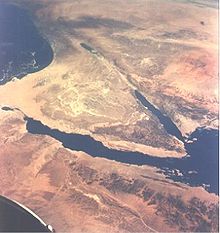

It lies between the Mediterranean Sea to the north, and the Red Sea to the south, and is the only part of Egyptian territory located in Asia as opposed to Africa, effectively serving as a land bridge between the two continents. In addition to its formal name, Egyptians also refer to it affectionately as the "Land of Fayrouz", based on the Ancient Egyptian "Dumafkat", which has the same meaning. The peninsula is currently controlled by Egypt, which has divided the region into two Egyptian governorates, and contains a population of approximately 1.3 million people.
The region has historically been the center of conflict between various political factions, based largely on its strategic geopolitical location. In addition to periods of direct rule by Egyptian governments (including the Ayyubids, the Mamluks, the Muhammad Ali Dynasty, and the modern Egyptian republic), like the rest of Egypt, it was also occupied and controlled by the Ottoman, and British empires. Israel invaded and occupied Sinai twice during the 20th Century, first during the Suez War of 1956, and secondly during and after the Six Day War of 1967. In the October War of 1973, it was the location of fierce fighting between Egyptian, and occupying Israeli forces.
History
Sinai was inhabited by the Monitu and was called Mafkat or Country of Turquoise. From the time of the First dynasty or before, the Egyptians mined turquoise in Sinai at two locations, now called by their Arabic names Wadi Maghareh and Serabit el-Khadim. The mines were worked intermittently and on a seasonal basis for thousands of years. Modern attempts to exploit the deposits have been unprofitable.These may be the first known mines.
The peninsula was governed as part of Egypt under the Mamluk Sultanate from 1260 until 1517, when the Ottoman Sultan, Selim the Grim, destroyed the Mamluks at the Battles of Marj Dabiq and al-Raydaniyya. From then until 1906, Sinai was administered by Ottoman provincial government of the Pashalik of Egypt, even following the establishment of the Muhammad Ali Dynasty's rule over the rest of Egypt in 1805. In 1906, the Ottoman Porte formally transferred administration of Sinai to the Egyptian Government, which essentially meant that it fell under the control of the United Kingdom, who had occupied and largely controlled Egypt since 1882.
The border imposed by the British runs in an almost straight line from Rafah on the Mediterranean shore to Taba on the Gulf of Aqaba. This line has served as the eastern border of Egypt ever since.
At the beginning of the 1948 Arab-Israeli War, Egyptian forces entered the former British Mandate of Palestine from Sinai to support Palestinian and other Arab forces against the newly declared State of Israel. For a period during the war, Israeli forces entered the north-eastern corner of Sinai. With the exception of the Palestinian Gaza Strip, which came under the administration of the All-Palestine Government, the western frontier of the former Mandate of Palestine became the Egyptian-Israeli frontier under the 1949 Armistice Agreement.
In 1956, Egypt nationalized the Suez Canal on the western side of the Sinai Peninsula and also used its control of the eastern side to impose a blockade on the Israeli port of Eilat. Following this, Israeli forces, aided by Britain, and France (which sought to reverse the nationalization and regain control over the Suez Canal), invaded Sinai and took control of much of the peninsula within a few days (see Suez Crisis). Several months later Israel withdrew its forces from Sinai, following strong pressure from the United States, and the Soviet Union. Following this the United Nations Emergency Force (UNEF) was stationed in Sinai to prevent any military occupation of the Sinai.
In 1967, Egypt reinforced its military presence in Sinai, renewed the blockade on Eilat, and on May 16 ordered the UNEF out of Sinai with immediate effect. Secretary-General U Thant eventually complied and ordered the withdrawal without Security Council authorization. Subsequent to Egyptian actions, Israel invaded Sinai, commencing the Six-Day War in which the Egyptian army was defeated, and Israel captured and occupied the entire peninsula. The Suez Canal, the east bank of which was now controlled by Israel, was closed.
In the October War of 1973, Egyptian engineering forces built pontoon bridges to cross the Suez Canal, and stormed the supposedly impregnable Bar-Lev Line while many Israeli soldiers were observing the holiday Yom Kippur. Though the Egyptians maintained control of most of the east bank of the Canal, in the later stages of the war, the Israeli military crossed the southern section of Canal, cutting off the Egyptian 3rd Army, and occupied a section of the west bank. After the war, as part of the subsequent Sinai Disengagement Agreements, Israel withdrew from the Canal, with Egypt's agreeing to permit passage of Israeli ships.
In 1979, Israel and Egypt signed a peace treaty in which Israel agreed to withdraw from the entirety of Sinai. Israel subsequently withdrew in several stages, ending in 1982. The Israeli pull-out involved dismantling almost all Israeli settlements, including the town of Yamit in north-eastern Sinai. The exception was Ofira, which became the resort town of Sharm el-Sheikh. The Treaty allows monitoring of the Sinai by the Multinational Force and Observers and limits the number of Egyptian military forces in the Peninsula.
Present
The Sinai Peninsula is currently divided among two Egyptian governorates, or provinces. The southern portion of the Sinai is called Ganub Sina in Arabic, literally "South of Sinai"; the northern portion is named Shamal Sina', or "North of Sinai". The other three governates converge on the Suez Canal, including el-Sewais, literally "the Suez"; on its southern end and crosses into African Egypt. In the center is el-Isma'ileyyah, and Port Said lies in the north with its capital at Port Said.Approximately 66,500 people live in Ganub Sina and 314,000 live in Shamal Sina'. Port Said itself has a population of roughly 500,000 people. Portions of the populations of el-Isma'ileyyah and el-Suweis live in Sinai, while the rest live on the western side of the Suez Canal in Egypt-proper. The combined population of these two governorates is roughly 1.3 million (only a part of that population live in the Sinai, while the rest live on the western side of the Suez Canal). Sinai is one of the coldest provinces in Egypt because of its high altitudes and mountainous topographies. Winter temperatures in some of Sinai's cities and towns reach −16°C.
Over the past 30 years the Sinai has become a tourist destination due to its natural setting, rich coral reefs, and biblical history. Large numbers of Egyptians from the Nile Valley and Delta have moved to the area to work in tourism, while at the same time development has robbed native Bedouin of their grazing land and fishing grounds. This clash of cultures has resulted in the Sinai becoming the site of several terrorist attacks targeting not only Westerners, and Israelis, but also Egyptians on holiday and working in tourism.
In order to help alleviate the problems faced by the Sinai Bedouin due to mass tourism, various NGOs have begun to operate in the region including the Makhad Trust, a UK charity who assist the Bedouin in developing a sustainable income whilst protecting Sinai's natural environment, heritage and culture.
http://en.wikipedia.org/wiki/Sinai
Bedouin بدوي
Bedouin
بدوي Derived from the Arabic word badawī بدوي ,a generic name for a desert-dweller, is a term generally applied to Arab nomadic pastoralist groups, who are found throughout most of the desert belt extending from the Atlantic coast of the Sahara via the Western Desert, Sinai, and Negev to the eastern coast of the Arabian desert.

It is occasionally used to refer to non-Arab groups as well, notably the Beja of the African coast of the Red Sea.
They constitute only a small portion of the total population of the Middle East although the area they inhabit is large due to their nomadic, or former nomadic lifestyle. Reductions in their grazing ranges and increases in their population, as well as the changes brought about by the discovery and development of oil fields in the region, have led many Bedouin to adopt the modern urban, sedentary lifestyle with its accompanying attractions of material prosperity.
HISTORY
Bedouins spread out over the pastures of the Arabian Peninsula in the centuries C.E., and are descendants from the first settlers of the Southwestern Arabia (Yemen), and the second settlers of North-Central Arabia, claimed descendants of Ishmael, who are called the Qayis. The rivalry between both groups of the Bedouins has raged many bloody battles over the centuries.
The fertile crescent of Arabia was known for its lucrative import trade with southern Africa, which included items such as exotic herbs and spices, gold, ivory, and livestock. The oases of the Bedouins were often mobile markets of trade, as their lifestyle involved frequent migrating of the herds in search of greener pastures. The Bedouins were often ruthless raiders of established desert communities, in a never-ending conquest for plunder and material wealth. Ironically, they were great lovers of the virtue of chastity in their women, who were ambassadors of generosity and hospitality. A group of tribal elders known as the Mijilas elected a tribal chieftain, or Sheikh, who governed over his people with fierce nomadic pride and loyalty.

Félix Bonfils (1831-1885) - "Chef de bedouins pasteurs" ("Head of shepherd beduins"). Catalogue n. 682. Middle East, circa 1880s.
In the first few centuries C.E., many Bedouin were converted to Christianity and Judaism, and many Bedouin tribes fell to Roman slavery. By the turn of the seventh century, most Bedouins had been converted to Islam.
The incessant warring caused great conflict and discontent among the tribal leaders, and as such they decided to branch out in their conquests as far as Syria, Palestine, Egypt, Iraq, and Persia, establishing a fortified extended Bedouin empire, often amazed at the excessive wealth of the civilizations which they conquered. The Bedouins infiltrated all of Arabia, influenced the language and Islamic religion with their power-hungry expansion of the empire. The Mongols took the city of Baghdad in 1258 C.E., and the Bedouin people were subjected to accepting Ottoman presence and authority.
The nineteenth century proved pivotal in the history of the Bedouins, as the British pushed through on their way to India. The piracy that provided the lavish lifestyle of the Bedouins came to an abrupt halt in many parts of the empire. By the 1930s, the oil fields had been established and farmed by Americans and British, which brought gratuitous wealth to the Arabian empire, bringing desert people into a modern world of lavish comforts and technology. The traditional nomadic Bedouin became an endangered species in terms of survival, as contemporary commerce rolled into Arabia.
The Bedouins were traditionally divided into related tribes. These tribes were organized on several levels- a widely-quoted Bedouin saying is:
When resources were plentiful, several tents would travel together as a goum. These groups were sometimes linked by patriarchical lineage but just as likely linked by marriage (new wives were especially likely to have male relatives join them), acquaintance or even no clearly defined relation but a simple shared membership in the tribe.
The next scale of interactions inside tribal groups was the ibn amm or descent group, commonly of three or five generations. These were often linked to goums, but whereas a goum would generally consist of people all with the same herd type, descent groups were frequently split up over several economic activities (allowing a degree of risk-management: should one group of members of a descent group suffer economically, the other members should be able to support them). Whilst the phrase descent group suggest purely a patriarchal arrangement, in reality these groups were fluid and adapted their genealogies to take in new members.
The largest scale of tribal interactions is obviously the tribe as a whole, led by a Sheikh. The tribe often claims descent from one common ancestor- as above, this appears patrilineal but in reality new groups could have genealogies invented to tie them in to this ancestor. The tribal level is the level that mediated between the Bedouin and the outside governments and organizations.
The Bedouin people revere their horses as westerners revere their children. The Bedouins love their horses so much that they often bed them down for the night, and wives sleep in the stables to encourage and facilitate warmth and "good dreams" for the animals. Horses are considered a gift from Allah, and any mixture of foreign blood from the mountains or the cities surrounding the desert was strictly forbidden, and considered an abomination. The proud Bedouin stoically disdain most breeds other than the long line of stout Arabian horses.

The Arabian horse was generally a weapon of war, and as such a well-mounted Bedouin could attack enemy tribes and plunder their livestock, adding to their own material wealth. These bold raids depended on a quick getaway with reliable horses. Mares were more practical than stallions, with their lighter weight and agility. They were trained not to nicker to the enemy tribe's horses, giving away their owner's approach. These stoic animals often displayed worthy exhibits of courage, taking spear thrusts in the side without giving any ground.
The Bedouin people could be as just as hospitable as they were warring. If a desert traveler touched their tent pole, they were obligated to welcome and invite this guest, along with his entourage and animals for up to three days without any payment. Status of the guest was indicated by the mare's bridle being hung from the tent's central pole, and in this way, tribes that were often at war would meet and, with great hospitality, break bread and share stories of their most noteworthy horses.
Bedouin Music

Bedouin music is highly syncopated and generally unaccompanied. Because songs are mostly a cappella, the vocals and lyrics are the most integral part of Bedouin music. Poetry (al-shi'ir al-nabatî) is a part of many songs. Other types include taghrud (or hidâ' ), the songs of camel-drivers, and dance songs of preparation for war (ayyâla, or 'arda).
Yamania songs are a type of Bedouin music that comes from the fishermen of the Arabian Peninsula. These songs are related to exorcism and are accompanied by a five-stringed lyre called the simsimiyya.
Among the popular singers to use elements of Bedouin music in their style is the Israeli Yair Dalal.
Ird is the Bedouin honor code for women. A woman is born with her ird intact, but sexual transgression could take her ird away. Ird is different from virginity, as it is emotional / conceptual. Once lost, ird cannot be regained.[1]
Sharaf is the general Bedouin honor code for men. It can be acquired, augmented, lost and regained. Sharaf involves protection of the ird of the women of the family, protection of property, maintenance of the honor of the tribe and protection of the village (if the tribe has settled down).[1]
Hospitality (diyafa) is a virtue closely linked to Sharaf. If required, even an enemy must be given shelter and fed for some days. Poverty does not exempt one from one's duties in this regard. Generosity is a related virtue, and in many Bedouin societies gifts must be offered and cannot be declined. The destitute are looked after by the community, and tithing is mandatory in many Bedouin societies. [2]
Bravery (hamasa) is also closely linked to Sharaf. Bravery indicated the willingness to defend one's tribe for the purpose of tribal solidarity and balance (assahiya). It is closely related to manliness (muruwa). Bravery usually entails the ability to withstand pain, including male circumcision.[2]
Members of a single tribe usually follow the same system of justice, and often claim descent from a single common ancestor. Closely related tribes may also follow similar systems of justice, and may even have common arbitrating courts. Jurists in Arab states have often referred to Bedouin customs for precedence. [3]
In smaller Bedouin tribes, conflict resolution can be as informal as talks between families of the two parties. However, social protocols of conflict resolution are in place for the larger tribes.
Bedouins do not have the concept of incarceration - being a nomadic tribe. Petty crimes, and some major ones, are typically settled by fines and grievous crimes by physical pain and bodily harm, or capital punishment. Bedouin tribes are typically held responsible for the action of their members, hence if an accused fails to pay a fine, the accused's tribe is expected to pay - upon which the accused, or the accused's family, becomes obligated to the tribe.
This is a custom practiced among the Bedouin of the Judea, Negev and Sinai. It is also practiced, and is said to have originated among some Bedouin tribes of Saudi Arabia. It is a protocol for lie detection, and is enacted only in the harshest of civil or criminal violations, like a blood feud - usually in the absence of witnesses. It entails the accused to lick a hot metal spoon and subsequently rinse the mouth with water. If the tongue shows signs of a burn, or a scar the accused is taken to be guilty of lying.[4] [5]
The basic ritual consists of the accused being asked to lick a hot metal object (spoon, ladle, rod, etc) thrice. He is provided with water for rinsing after the ceremony. He is then inspected by the official who presides over the ceremony - the Mubesha (or Mubasha) and by the designated witnesses of the ritual. If the person undergoing the ritual is found to have a scarred or burnt tongue, it is concluded that he was lying. The Howeitat Bedouin call this ritual "the true light of God."
The Bisha'a is usually performed only to resolve the gravest of civil or criminal offenses, and is a voluntary ritual in the sense that consent on the part of the ritual undergoer is required. Typically, Bisha'a is only performed for those cases where there are no witnesses regarding the disputed issue. Societal peer and hierarchy pressures may, however, force consent. In the case of the defendant agreeing to a Bisha'a ceremony, and subsequently declining to perform the ritual or running away, the defendant is considered guilty.
The ritual is usually a public affair, with both parties arriving with fanfare. Tea is often served. Women are allowed to participate in the occasion, unlike other judiciary hearings of the Bedouins.
The instrument of the ritual - typically a metal ladle called the tassa bil basha is heated up by sticking the ladle down into the flames, the convex side being pressed into the ashes. Gasoline is often poured on the metal to heat it up. In the absence of a ladle, other metal objects like knives, spoons and rods are also used, and use of non-metals like rocks have also been documented. Both parties recount their side of the story during the process of heating, with the Mubesha interrupting for clarification. The Mubesha can also summarize the events. When the Mubesha decides that the ladle is sufficiently heated, both parties swear to God that the issue will end with the ritual, and the defendant undertakes the test. In some variants, the claimant can lick the spoon before the defendant in a bid to worry the defendant (This rare variant is practiced by the Armilat Bedouin). The Mubesha then counts worry beads (possibly prayer beads), and after a suitable lapse of time, inspects the tongue of the person undergoing the ritual. He decides whether or not the tongue is burnt (or the degree of the burn in some cases), and relates his decision to the assembly. The defendant then shows his tongue to the witnesses for inspection.
The Bisha'a has been variously described in ethnographic and cross-cultural studies.[7] [8] [9] [10] The earliest well-documented reports of the Bisha'a ceremony come from the accounts of Austin Kennett [11], Claude Jarvis [12] [13] [14]. Later accounts of Glubb Pasha[4] and Aref al-Aref [15] also refer to the practice. Glubb Pasha's account mentions the high rate of correct judgement, which he attributes to the skill of the mubesha. A quote from his account:

Government policies on settlement are generally put in place through a desire to provide services (schools, health care, law enforcement and so on). This is considerable easier for a fixed population than for semi-nomadic pastoralists.[16]
This entry abides by terms of Creative Commons Licence.
بدوي Derived from the Arabic word badawī بدوي ,a generic name for a desert-dweller, is a term generally applied to Arab nomadic pastoralist groups, who are found throughout most of the desert belt extending from the Atlantic coast of the Sahara via the Western Desert, Sinai, and Negev to the eastern coast of the Arabian desert.

It is occasionally used to refer to non-Arab groups as well, notably the Beja of the African coast of the Red Sea.
They constitute only a small portion of the total population of the Middle East although the area they inhabit is large due to their nomadic, or former nomadic lifestyle. Reductions in their grazing ranges and increases in their population, as well as the changes brought about by the discovery and development of oil fields in the region, have led many Bedouin to adopt the modern urban, sedentary lifestyle with its accompanying attractions of material prosperity.
HISTORY
Bedouins spread out over the pastures of the Arabian Peninsula in the centuries C.E., and are descendants from the first settlers of the Southwestern Arabia (Yemen), and the second settlers of North-Central Arabia, claimed descendants of Ishmael, who are called the Qayis. The rivalry between both groups of the Bedouins has raged many bloody battles over the centuries.
The fertile crescent of Arabia was known for its lucrative import trade with southern Africa, which included items such as exotic herbs and spices, gold, ivory, and livestock. The oases of the Bedouins were often mobile markets of trade, as their lifestyle involved frequent migrating of the herds in search of greener pastures. The Bedouins were often ruthless raiders of established desert communities, in a never-ending conquest for plunder and material wealth. Ironically, they were great lovers of the virtue of chastity in their women, who were ambassadors of generosity and hospitality. A group of tribal elders known as the Mijilas elected a tribal chieftain, or Sheikh, who governed over his people with fierce nomadic pride and loyalty.

Félix Bonfils (1831-1885) - "Chef de bedouins pasteurs" ("Head of shepherd beduins"). Catalogue n. 682. Middle East, circa 1880s.
In the first few centuries C.E., many Bedouin were converted to Christianity and Judaism, and many Bedouin tribes fell to Roman slavery. By the turn of the seventh century, most Bedouins had been converted to Islam.
The incessant warring caused great conflict and discontent among the tribal leaders, and as such they decided to branch out in their conquests as far as Syria, Palestine, Egypt, Iraq, and Persia, establishing a fortified extended Bedouin empire, often amazed at the excessive wealth of the civilizations which they conquered. The Bedouins infiltrated all of Arabia, influenced the language and Islamic religion with their power-hungry expansion of the empire. The Mongols took the city of Baghdad in 1258 C.E., and the Bedouin people were subjected to accepting Ottoman presence and authority.


The nineteenth century proved pivotal in the history of the Bedouins, as the British pushed through on their way to India. The piracy that provided the lavish lifestyle of the Bedouins came to an abrupt halt in many parts of the empire. By the 1930s, the oil fields had been established and farmed by Americans and British, which brought gratuitous wealth to the Arabian empire, bringing desert people into a modern world of lavish comforts and technology. The traditional nomadic Bedouin became an endangered species in terms of survival, as contemporary commerce rolled into Arabia.
The Bedouins were traditionally divided into related tribes. These tribes were organized on several levels- a widely-quoted Bedouin saying is:
I against my brothers, I and my brothers against my cousins, I and my brothers and my cousins against the worldThe individual family unit (known as a tent or bayt) typically consisted of three or four adults (a married couple plus siblings or parents) and any number of children, and would focus on semi-nomadic pastoralism, migrating throughout the year following water and plant resources. Royal Tribes traditionally herded camels, whilst others herded sheep, and goats.
When resources were plentiful, several tents would travel together as a goum. These groups were sometimes linked by patriarchical lineage but just as likely linked by marriage (new wives were especially likely to have male relatives join them), acquaintance or even no clearly defined relation but a simple shared membership in the tribe.
The next scale of interactions inside tribal groups was the ibn amm or descent group, commonly of three or five generations. These were often linked to goums, but whereas a goum would generally consist of people all with the same herd type, descent groups were frequently split up over several economic activities (allowing a degree of risk-management: should one group of members of a descent group suffer economically, the other members should be able to support them). Whilst the phrase descent group suggest purely a patriarchal arrangement, in reality these groups were fluid and adapted their genealogies to take in new members.
The largest scale of tribal interactions is obviously the tribe as a whole, led by a Sheikh. The tribe often claims descent from one common ancestor- as above, this appears patrilineal but in reality new groups could have genealogies invented to tie them in to this ancestor. The tribal level is the level that mediated between the Bedouin and the outside governments and organizations.
The Bedouin people revere their horses as westerners revere their children. The Bedouins love their horses so much that they often bed them down for the night, and wives sleep in the stables to encourage and facilitate warmth and "good dreams" for the animals. Horses are considered a gift from Allah, and any mixture of foreign blood from the mountains or the cities surrounding the desert was strictly forbidden, and considered an abomination. The proud Bedouin stoically disdain most breeds other than the long line of stout Arabian horses.

The Arabian horse was generally a weapon of war, and as such a well-mounted Bedouin could attack enemy tribes and plunder their livestock, adding to their own material wealth. These bold raids depended on a quick getaway with reliable horses. Mares were more practical than stallions, with their lighter weight and agility. They were trained not to nicker to the enemy tribe's horses, giving away their owner's approach. These stoic animals often displayed worthy exhibits of courage, taking spear thrusts in the side without giving any ground.
The Bedouin people could be as just as hospitable as they were warring. If a desert traveler touched their tent pole, they were obligated to welcome and invite this guest, along with his entourage and animals for up to three days without any payment. Status of the guest was indicated by the mare's bridle being hung from the tent's central pole, and in this way, tribes that were often at war would meet and, with great hospitality, break bread and share stories of their most noteworthy horses.
Bedouin Music

Bedouin music is highly syncopated and generally unaccompanied. Because songs are mostly a cappella, the vocals and lyrics are the most integral part of Bedouin music. Poetry (al-shi'ir al-nabatî) is a part of many songs. Other types include taghrud (or hidâ' ), the songs of camel-drivers, and dance songs of preparation for war (ayyâla, or 'arda).
Yamania songs are a type of Bedouin music that comes from the fishermen of the Arabian Peninsula. These songs are related to exorcism and are accompanied by a five-stringed lyre called the simsimiyya.
Among the popular singers to use elements of Bedouin music in their style is the Israeli Yair Dalal.
Honor codes
Sharaf and Ird are Bedouin honor codes. It is one of three Bedouin aspects of ethics that contain significant amounts of pre-Islamic customs: viz. those of hospitality, courage, and honor.[1] Bedouin justice dispensation systems are based on these honor codes. However, the honor codes are falling into disuse as more and more Bedouins accept Sharia or national penal codes as the means for dispensing justice.Ird is the Bedouin honor code for women. A woman is born with her ird intact, but sexual transgression could take her ird away. Ird is different from virginity, as it is emotional / conceptual. Once lost, ird cannot be regained.[1]
Sharaf is the general Bedouin honor code for men. It can be acquired, augmented, lost and regained. Sharaf involves protection of the ird of the women of the family, protection of property, maintenance of the honor of the tribe and protection of the village (if the tribe has settled down).[1]
Hospitality (diyafa) is a virtue closely linked to Sharaf. If required, even an enemy must be given shelter and fed for some days. Poverty does not exempt one from one's duties in this regard. Generosity is a related virtue, and in many Bedouin societies gifts must be offered and cannot be declined. The destitute are looked after by the community, and tithing is mandatory in many Bedouin societies. [2]
Bravery (hamasa) is also closely linked to Sharaf. Bravery indicated the willingness to defend one's tribe for the purpose of tribal solidarity and balance (assahiya). It is closely related to manliness (muruwa). Bravery usually entails the ability to withstand pain, including male circumcision.[2]
Bedouin systems of justice
Bedouin systems of justice are as varied as the Bedouin tribes themselves. A number of these systems date from pre-Islamic times, and hence do not follow the Sharia. Many of these systems are falling into disuse as more and more Bedouins follow the Sharia or national penal codes for dispensing justice.General principles
Bedouin justice is dispensed based on the honor codes of the Bedouin for men (sharif) and women (ird). [1] Bedouin customs relating to preservation of honor, along with those relating to hospitality and bravery, date to pre-Islamic times. [1] In many Bedouin courts, women often do not have a say as defendant or witness, [3] and decisions are taken by village elders.Members of a single tribe usually follow the same system of justice, and often claim descent from a single common ancestor. Closely related tribes may also follow similar systems of justice, and may even have common arbitrating courts. Jurists in Arab states have often referred to Bedouin customs for precedence. [3]
In smaller Bedouin tribes, conflict resolution can be as informal as talks between families of the two parties. However, social protocols of conflict resolution are in place for the larger tribes.
Bedouins do not have the concept of incarceration - being a nomadic tribe. Petty crimes, and some major ones, are typically settled by fines and grievous crimes by physical pain and bodily harm, or capital punishment. Bedouin tribes are typically held responsible for the action of their members, hence if an accused fails to pay a fine, the accused's tribe is expected to pay - upon which the accused, or the accused's family, becomes obligated to the tribe.
Some common forms of judicial hierarchy
- Orfi: A single level judicial system - Some Bedouin tribes of the Sinai use arbitration by Orfi courts. Orfi courts do not seek to find the truth or condemn the guilty, they are more of a mediating agency between the two parties. Orfi courts are headed by a Muktar or a judge. Orfi courts can authorize the Bisha'a, but could be overruled by protocols governing blood feuds.[3]
- Ghadi: A 2-level hierarchy - The Alegat Bedouin of Egypt appoint three judges or Ghadi. One may appeal to a different judge if one is unhappy with the result of the conflict resolution. Alternatively, one may appeal to the tribe leader or Sheikh, whose judgment cannot be overruled.[3]
- Armilat hierarchy: Multi-level hierarchy - The Armilat Bedouin have five levels of arbiters - judges with increasing levels of authority. The lowest level arbiters are the Kafeel (a person of power and stature or great physical strength in the tribe, chosen by each party). The claimant then approaches the Kafeel of the other party, who acts as intermediary. Kafeels are paid for their work and not hereditary. All arbiters above the Kafeel have hereditary powers and in increasing power of arbitration, are: Kabir, Adraybee, Manshaad and the highest authority - the Jrabiee. The Jrabiee are actually capable of performing the Bisha'a, and are hence Mubashas in this sense.
Trials by ordeal
Trials by ordeal are used by the Bedouin to decide on the gravest of crimes. Authorities to hold such trials and judge them are granted to few, and that too on a hereditary basis. The most well-known of the trials by ordeal is the Bisha'a or Bisha.This is a custom practiced among the Bedouin of the Judea, Negev and Sinai. It is also practiced, and is said to have originated among some Bedouin tribes of Saudi Arabia. It is a protocol for lie detection, and is enacted only in the harshest of civil or criminal violations, like a blood feud - usually in the absence of witnesses. It entails the accused to lick a hot metal spoon and subsequently rinse the mouth with water. If the tongue shows signs of a burn, or a scar the accused is taken to be guilty of lying.[4] [5]
The basic ritual consists of the accused being asked to lick a hot metal object (spoon, ladle, rod, etc) thrice. He is provided with water for rinsing after the ceremony. He is then inspected by the official who presides over the ceremony - the Mubesha (or Mubasha) and by the designated witnesses of the ritual. If the person undergoing the ritual is found to have a scarred or burnt tongue, it is concluded that he was lying. The Howeitat Bedouin call this ritual "the true light of God."
The Bisha'a is usually performed only to resolve the gravest of civil or criminal offenses, and is a voluntary ritual in the sense that consent on the part of the ritual undergoer is required. Typically, Bisha'a is only performed for those cases where there are no witnesses regarding the disputed issue. Societal peer and hierarchy pressures may, however, force consent. In the case of the defendant agreeing to a Bisha'a ceremony, and subsequently declining to perform the ritual or running away, the defendant is considered guilty.
The ritual is usually a public affair, with both parties arriving with fanfare. Tea is often served. Women are allowed to participate in the occasion, unlike other judiciary hearings of the Bedouins.
The instrument of the ritual - typically a metal ladle called the tassa bil basha is heated up by sticking the ladle down into the flames, the convex side being pressed into the ashes. Gasoline is often poured on the metal to heat it up. In the absence of a ladle, other metal objects like knives, spoons and rods are also used, and use of non-metals like rocks have also been documented. Both parties recount their side of the story during the process of heating, with the Mubesha interrupting for clarification. The Mubesha can also summarize the events. When the Mubesha decides that the ladle is sufficiently heated, both parties swear to God that the issue will end with the ritual, and the defendant undertakes the test. In some variants, the claimant can lick the spoon before the defendant in a bid to worry the defendant (This rare variant is practiced by the Armilat Bedouin). The Mubesha then counts worry beads (possibly prayer beads), and after a suitable lapse of time, inspects the tongue of the person undergoing the ritual. He decides whether or not the tongue is burnt (or the degree of the burn in some cases), and relates his decision to the assembly. The defendant then shows his tongue to the witnesses for inspection.
The Mubesha
The right to perform Bisha'a is granted only to the Mubesha, and this right is passed on from father to son, along paternal lineages. The Mubesha hears the account of the dispute before performing the ceremony, and is also responsible for pressing the metal spoon against the tongue of the person undergoing the Bisha'a. There are only a few practitioners of the Bisha'a in Bedouin society. A single Mubesha might arbitrate over several tribes and large geographical areas, like the Mubesha of Abu Sultan in Egypt.The legend behind the ritual
The legend behind the Bisha'a goes back to a man of great powers named Weymer abu Ayad of the Sultani branch of the Ayayideh tribe of the Qahtan confederation of Bedouins in southern Saudi Arabia. Many Mubesha claim to be able to trace their heritage to the tribe of Ayayideh. Weymer was a tracker but was robbed of a personal possession. He figured out the criminal, but there were no witnesses. Apparently, Weymer challenged the suspect to lick a red-hot branding iron three times which he would also lick three times, saying that the guilty would be shown. The suspect ran away.Documentation
The Bisha'a was illegal under British rule, though numerous accounts of the performance of the ritual is documented in the records of the Foreign Office [6] The Bisha'a is illegal under the Israeli judicial system. It is also inconsistent with the Sharia, being an old ritual passed on by Bedouins from pre-Islamic times. Most Arab states thus denounce the Bisha'a. The practice is getting rarer, with more and more Bedouins preferring standard courts of law for enactment of justice.The Bisha'a has been variously described in ethnographic and cross-cultural studies.[7] [8] [9] [10] The earliest well-documented reports of the Bisha'a ceremony come from the accounts of Austin Kennett [11], Claude Jarvis [12] [13] [14]. Later accounts of Glubb Pasha[4] and Aref al-Aref [15] also refer to the practice. Glubb Pasha's account mentions the high rate of correct judgement, which he attributes to the skill of the mubesha. A quote from his account:
In practice, more than half the accused persons who set out to lick the spoon lose their nerve while the spoon is in the fire, and voluntarily confess to their guilt without blistering their tongues. A further twenty-five percent probably blister their tongues, and twenty-five percent are declared innocent. The efficiency of the process depends, of course, entirely on the skill of the “mubesha.” The days of the “true light of God” are doubtless numbered, and in the full glare of modern democracy and (doubtless) enlightenment, the little red-hot spoon will soon vanish. Before it does so, I cannot resist paying a tribute to the skill of those who practice this infamous superstition, and to the considerable number of miscarriages of justice which were by this means avoided.The quasiscientific explanation of the ordeal is that stress would cause the mouth of liar to dry up, hence increasing the possibility of a burn. However, the stress of the ordeal could just as easily cause the same physical symptoms in an innocent person.
Blood feud protocols
Protocols regarding blood feuds often override court decisions, and may vary from tribe to tribe. Punishment for murder is usually harsher than punishment meted out to acts of disturbing the tribal solidarity (assahiya - tribal solidarity). The punishment for murder is usually capital punishment, but in some tribes a blood vengeance fee may be extracted instead. The general governing principle is that of Dum butlab dum (Blood begets blood). In many tribes, the first five levels of male cousins (Khamsa) are obligated to seek out and kill the murderer. If not found, another male member of the murderer's tribe would have to die in the retaliatory killing.[1]Contemporary Bedouin
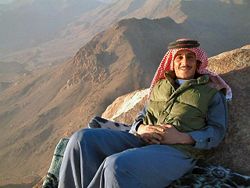
Starting in the 1950s and 1960s, many Bedouin started to leave the traditional, nomadic life to work and live in the cities of the Middle East, especially as grazing ranges have shrunk and population levels have grown. In Syria, for example, the Bedouin way of life effectively ended during a severe drought from 1958 to 1961, which forced many Bedouin to give up herding for standard jobs. Similarly, government policies in Egypt, oil production in Libya and the Gulf, and a desire for improved standards of living have had the effect that most Bedouin are now settled citizens of various nations, rather than nomadic herders and farmers.
Government policies on settlement are generally put in place through a desire to provide services (schools, health care, law enforcement and so on). This is considerable easier for a fixed population than for semi-nomadic pastoralists.[16]
Notable Bedouin tribes
There are a number of Bedouin tribes, but the total population is often difficult to determine, especially as many Bedouin have ceased to lead nomadic or semi-nomadic lifestyles (see above) and joined the general population. Some of the tribes and their historical population:- Aniza, the largest bedouin tribe, estimated at about 700,000 members (including the Rwala), live in northern Saudi Arabia, western Iraq, and the Syrian steppe.
- Rwala, a large clan from the Aniza tribe, live in Saudi Arabia, but extend through Jordan into Syria and Iraq, in the 1970s, according to Lancaster, there were 250,000-500,000 Rwala
- Howeitat in Wadi Araba, and Wadi Rum, Jordan
- Beni Sakhr in Syria and Jordan
- Al Murrah in Saudi Arabia
- Bani Hajir (AlHajri) in Saudi Arabia and the eastern Gulf States
- Bani Khalid in Jordan, Israel, Palestinian Territories, and Syria, also in the eastern Arabian Peninsula
- Shammar in Saudi Arabia, central, and western Iraq, Shammar is the second largest bedouin tribe.
- Mutair, live in the Nejd plateau, also, many small families from the Mutair tribe have lived in the Gulf States
- Al-Ajman, eastern Saudi Arabia and the Gulf States
- Sudair, southern Nejd, around the Sudair region of Saudi Arabia
- Al-Duwasir, southern Riyadh, and Kuwait
- Subai'a, central Nejd, and Kuwait
- Harb, a large tribe, living around Mecca
- Juhayna, a large tribe, many of its warriors were recruited as mercenaries during WWI by Prince Faisal. It surrounds the area of Mecca, and extends to Southern Medina
This entry abides by terms of Creative Commons Licence.
Subscribe to:
Comments (Atom)