Saturday, May 19, 2012

Giza Pyramids Epic 3 planet alignment!!! 3rd December

Planetary alignment that will take place Dec 3 2012 one hour before sunrise is dead-on alignment with the Pyramids at Giza


 All the information here:

Tuesday, May 15, 2012

Beautiful Aswan Nubia Egypt!

                       
                          Anna Kato Hotel in Aswan Nubia Upper Egypt


                                     Sofitel Old Cataract Aswan


                                   The Unfinished Obelisk Aswan-Egypt


 All photographs courtesy of Mr Ashraf Abdel Mohsen - Egypt

You can visit his Facebook page here to see more stunning photography

Link to Mr Ashraf Abdel Mohsen photography


Egyptian Revolution


Sinai Kidnapping ALERT!!!!!!

 Please share this information as far and wide as possible!!!


Helen Kirker's number is 01222304041.

Please call her if you can help out in any way.

TO WHOM IT MAY CONCERN:
Confirmed news from Sharm Elsheikh, Egypt: Ezzat Milad Ibrahim from Shobra Misr. ID # 25212300101714 date of birth 30-12-1952. was kidnapped on Saturday 12th May 2012 at about 5pm till now. 


20 armed bearded with Bedouin traditional clothes, the reason reported for the abduction as a result of a Land dispute between Farag Saad (Bedouin) and Emad Mina (Cairo Businessman ad owner of real estate in Sharm). 

Mr. Ezzat is Mr. Mina's employee. The police have refused until now to give the case a number or make official reports for unclear reasons till now.

Monday, May 14, 2012

'2400 km Cross Egypt Challenge 2012' book now!

                                        October 19th - 27th 2012


                            SCHEDULE


Thursday, October 18, 2012
Pre Event: All Day: Pick up participants from the airport
PM: Team meetingsPM: Welcome dinner
Friday, October 19, 2012
Day 1: Early AM: morning brief
Early AM: official launch ceremony in Abdeen Square in Cairo
Early AM: start from Cairo
Ride for 275 km (Estimated time: 6 hours)
PM: arrive to Alexandria and quick city tour
PM: team dinner in Alexandria and overnight
Saturday, October 20, 2012
Day 2: Early AM: morning brief
Early AM: start from Alexandria
Ride for 325 km (Estimated time: 6 hours)
PM: arrive to Marsa Matrouh, city tour and overnight
Sunday, October 21, 2012
Day 3: Early AM: morning brief
Early AM: start from Marsa Matrouh
Ride for 325 km (Estimated time: 6 hours)
PM: arrive to Siwa Oasis and overnight
PM: scooter Maintenance
Monday, October 22, 2012
Day 4: Early AM: morning brief
Early AM: start from Siwa Oasis
Ride for 300 km (Estimated time: 8 hours)
PM: Arrive to camp sitePM: Egyptian folklore night and desert BBQ
PM: camping and overnight in the desert
Tuesday, October 23, 2012
Day 5: Early AM: morning briefEarly AM: start from camp site
Ride for 325 km (Estimated time: 7 hours)
Noon: visit the white desert
PM: arrive to Farafra Oasis and overnight
Wednesday, October 24, 2012
Day 6: Early AM: morning briefEarly AM: start from Farafra Oasis
Ride for 300 km (Estimated time: 6 hours)
PM: arrive to Dakhla Oasis and overnight
PM: scooter Maintenance
Thursday, October 25, 2012
Day 7: Early AM: morning briefEarly AM: start from Dakhla Oasis
Ride for 200 km (Estimated time: 3.5 hours)
PM: arrive to Kharga Oasis and overnight
Friday, October 26, 2012
Day 8: Early AM: morning briefEarly AM: start from Kharga Oasis
Ride for 350 km (Estimated time: 7 hours)
PM: arrive to Luxor
PM: final press conference and overnight in Luxor
PM: farewell dinner
Saturday, October 27, 2012
Day 9: AM: transfer to Luxor airportAM: Flights back to Cairo

Cross Egypt Challenge is not a commercial event, therefore the following rates / fees cover the actual cost of participating in such a unique event.

Registrations fees for the 2012 season of Cross Egypt Challenge are: LE 9,600 or USD 1,600

All fees are to be paid at the time we confirm your participation spot f the Cross Egypt Challenge 2012 season. All banking details will be forwarded to you at the time of notification.

THESE FEES INCLUDE:
- Securing a scooter for the participant during the challenge
- Securing a brand new helmet for the participant's use during the challenge
- Securing a brand new gloves for the participant's use during the challenge
- 2 branded polo shirts + 4 branded long sleeve t-shirts for each participant to wear during the challenge
- Refueling during the entire challenge
- Oil changes during the challenge
- Scooter maintenance during the challenge
- Road tolls (where applicable)
- Cost of army/military and special permits for the entire route
- Accommodation for 7 nights in hotels
- Camping in the desert for 1 night (with all camp gear provided)
- Desert camping activities
- All meals during the challenge including welcome and farewell dinners.
- Return flight from Luxor to Cairo

THESE FEES DO NOT INCLUDE:
- Flights from/to Egypt (for international participants)
- Visa charges
- Extra accommodation prior or after the above schedule
- Extra food and beverage beyond 3 meals a day
- Any personal extras or any expense not mentioned above


Last years 2011 blog

Saturday, October 22nd, 2011


The riders had another early start. They made their way through the desert road leading to Toshka then to Abu Simbel. The weather was hot and the ride was long. Mid-day, the team stopped for some off-road activities and to have a taste of the desert. They took their scooters off-road and challenged the little engines in the sand.

After playtime, they continued onwards until they have reached Toshka, where they saw the Sheikh Zayed Canal that brings water into the heart of the Eastern Egyptian desert for land reclamation.

As they were back on the road, and after a while, the team members could suddenly see the “Welcome to Abu Simbel” sign, and were extremely happy to reach the end. They halted their scooters and had a moment of celebration. They had done it!

The team reached the Abu Simbel Temples. There they were greeted by the mayor of the city, Mr. Asaad Abd El Mageed and were given a tour of the complex.

It was explained to them how these huge structures were saved and moved in the sixties from their original location to make room for Lake Nasser. After finishing their tour of the temples, the adventurers took a historical photograph in front of Abu Simbel, marking the end of their Cross Egypt Challenge’s journey.

The riders covered a total of 2000 km. They started from the very north of Egypt; the city of Alexandria on the Mediterranean coast of Egypt. They travelled all the way to the eastern border of Egypt to the resort city of Taba. They moved through Sharm El Sheikh and Hurghada to make it to Abu Simbel which is only 50 km from the southern border of Egypt with the Sudan.


Friday, October 21st, 2011


The team set out early in the morning for Aswan. They took another agricultural road which was described by one of the team members as the best road they were on. He said “This road samples all of Egypt; you can see the Nile River, agricultural lands, deserts and mountains along the way. You can see villages along the Nile and others under large mountains. You can see temples, railroads and new construction; you can simply see Egypt as you pass through this road”.

On this road, the scooter-riders had several stops. They visited the Kom Ombo Temple which is dedicated to the crocodile God Sobek, God of fertility. They also had a stop for Friday prayers at a small Nubian village called Daboud. After prayers the riders met with the Nubian villagers and took photographs with them. Along their journey they stopped at some date and sugar cane fields and enjoyed the villagers’ hospitality, who offered them all kinds of dates.

The team finally reached Aswan and headed straight to the High Dam and Lake Nasser that extends for 500 km, were they stopped for a quick tour.

At night the team members gathered at the hotel to plan the logistics of their 9th and final day, as they had a 280 km journey to the temple of Abu Simbel and on the road from Aswan to Abu Simbel was only one gas station that has only diesel fuel and not petrol used to run their scooters. The scooters as well as the reserve tanks that the team carries can only run the scooters for 220 km, and so they had to look for extra tanks to carry the extra fuel needed. An extra reserve tank was found and so they were ready to go.


Thursday, October 20th, 2011


Day seven has arrived, and the adventurers set out just after sunrise for a very long day ahead. They had to cross about 280 km from Hurghada to Luxor, and the journey proved to be a difficult one due to road construction.

As the team passed through the city of Qena, they took the agricultural road from Qena to Luxor and enjoyed a much needed change in scenery. They feasted their eyes on the fertile green fields to their left and right.

The team was given a tour of the vast temple where they visited the Great Hypostyle Hall, the Sacred Lake, and made their seven turns around the Sacred Scarab for good luck. The Cross Egypt Challenge team was also given a special permission for a photo-shoot on their scooters in front of the Karnak Temple. The riders then rode to Luxor’s west bank where they visited the beautiful temple of Queen Hatshepsut. The riders mingled and took photographs with tourists and locals who had heard about the Cross Egypt Challenge from newspapers and television.


Wednesday, October 19th, 2011


The team had planned a free day for day six. They did some sight-seeing in the city of Hurghada and went to the Governorate building, where they were met by the Red Sea Governor Major General Mahmoud Assem and another press conference was held. They were then awarded the Shield of the Red Sea Governorate as a token of appreciation for their efforts. There was time for some interviews with local and national radio and some television stations.

The team continued with their tour of Hurghada, stopping for some photographs and for souvenir shopping. They even made a stop at a local coffee shop, or “Qahwa” in local Egyptian language, to get a real taste of Egyptian tradition and Egyptian tea.

Later that night the riders chilled at the famous Little Buddha to enjoy Hurghada’s night life.


Tuesday, October 18th, 2011


The scheduled ferry ride from Sharm El Sheikh to Hurghada has been cancelled due to the ferries being non-operational at that time, so instead the team took a flight to Hurghada while a truck was hired to transport the scooters to their destination by land. The scooters have been loaded on the truck the night before and were properly fastened for the road.

The team took their plane in the morning of the 18th and arrived at Hurghada shortly after. They enjoyed a relaxing day at the beach, soaked up the Egyptian sun and played some water sports. By evening, their scooters had already arrived safely.


Monday, October 17th, 2011


Due to the long route taken the previous day, day four included a short journey from Dahab to Sharm El Sheikh. The team took it easy and went sight-seeing in the city of Dahab, took a stroll on the Dahab boardwalk and did some souvenir shopping, then got on the road nearing midday.

Unfortunately, during the ride from Dahab to Sharm Elsheikh, one of the riders, Mona Elmadany, encountered some rocks on a sharp curve on the road and had an accident. The ambulance arrived almost immediately (in about 7 minutes) and transported her to a hospital in Dahab. She suffered several cuts and bruises and so was transferred to Sharm El Sheikh International Hospital. She was held back due to her injuries, and wouldn’t be able to complete the challenge. For this reason her fellow team members decided to dedicate the rest of the journey in her honor.

After making sure Mona was ok, the rest of the team continued their journey to Sharm Elsheikh where they were greeted by Major General Khaled Fouda, the Governor of South Sinai, who held an official celebration for the team. The governor has been notified that one of the team members had suffered an accident and was in hospital in Sharm El Sheikh, so later that evening the governor paid Mona a visit at the hospital and gave her roses and some words of encouragement.


Sunday, October 16th, 2011


With over 430 km, the third day was originally supposed to be the longest of the journey. The team got up early in the morning for breakfast and at 8 a.m. they were set for their eight hour ride from Suez to Dahab passing through Taba. They have been surrounded by beautiful scenery along the way, and so have made several stops to take photos, enjoy Egypt’s magnificent natural wonders and have some rest.

From Suez the riders took the 1.63 km long Ahmed Hamdy tunnel, which is an automobile tunnel that connects Africa to the Sinai Peninsula from under the Suez Canal. The team reached Taba by sunset where they took some photographs at the Egyptian-Israeli border. At this point, the team had been running behind schedule. And their journey from Taba to Dahab was dark and dangerous. For this reason they stopped several times on the way. Their planned eight hour journey took them about fourteen hours to complete. By the time they reached Dahab, everyone was pleased that they have made it safely and they can finally rest.


Saturday, October 15th, 2011


Early Saturday morning the team returned to the Pyramids of Giza for their photo shoots at the Giza Plateau.

After spending two hours, the riders were back on the road. They rode through Cairo’s traffic visiting famous landmarks as Kasr el Nile bridge, where the team stood for a moment of silence in remembrance of the martyrs of January 25th revolution, then the world’s famous Tahrir Square, which was the heart of the recent Egyptian revolution, and finally Abdeen Square, where Cairo Governor welcomed them and held an official reception and a press conference to the team.

The team then rode through through the historical parts of Islamic Cairo where they passed by Saladin’s Citadel of Cairo and its surrounding ancient aqua duct “Magra-Al Oyoun” before heading on their way to the last stop of the second day, Suez city on the way to the eastern Egyptian borders at Taba.


Friday, October 14th, 2011


The long awaited Cross Egypt Challenge has finally taken off from Alexandria on Friday, October 14th. The Cross Egypt Challenge team gathered Friday morning in front of the Bibliotheca Alexandrina to bid farewell to their families, friends, and fans. There was a huge gathering on the Corniche where cameras flashed and people cheered as the riders hit the open road.

The team started their 1700 km journey right on schedule. Their first stop was at the Pyramids of Giza where a press conference was hold with the scenic back-drop of the sun setting on the Pyramids and Sphinx.

Contact

give us a call at +20 (100) 721-0000 or shoot us an email at:

Red Sea Job Vacancies

Find a job in the Red Sea area


Check out job vacancies here

and here one Facebook

Saturday, May 12, 2012

Rd Sea coral spawning


A group of Egyptian scientists have witnessed and filmed the first account of mass coral spawning in the Red Sea. The event last weekend is considered a scientific breakthrough, as mass coral spawning was previously believed to only occur in tropical locations.


Mass spawning is an event of synchronized reproduction, where coral colonies release their gametes – eggs and sperm – simultaneously in large quantities over a short period of time, in order to maximize chances of fertilization.
The mass release is connected to the moon’s cycles, as it occurs around midnight, once a year, two or three days before or after a full moon. It is believed a combination of the moonlight and gravitational pull stimulates the event.
This event involved the Acropora species, a group of common hard corals. It occurred overnight between the 3 and 4 May, before the full moon on 6 May.
Mahmoud Hanafy, a marine biologist for the Hurghada Environmental Protection and Conservation Association (HEPCA), who was part of the team that filmed the event, said that he has been trying to prove the occurrence of mass spawning in the Red Sea for nine years, despite disbelief from scientists around the world.


“Once a year, overnight, we’d find all the corals in spent [post gamete release] condition, but could never pinpoint the exact moment beforehand,” he said. “This time, we set up a film crew, and went diving every night from 10pm – 2am and we caught it, and have now sent the video it to scientific journals around the world.”


The release caused the sea to become clouded by an unidentified reddish substance, and apparently startled unknowing observers the next morning.
The occurrence of mass coral spawning in the Red Sea has magnificent implications with regards to the restoration and rehabilitation of the sea’s deteriorating coral reefs, as now once a year, scientists can collect large quantities of gametes and use them to breed restorative coral in labs.
It is also expected to encourage dive tourism, as the witnessing of mass coral spawning is, in HEPCA managing director Amr Ali’s words, “a diver’s Disneyland.”

Friday, April 27, 2012

E Booking trains in Egypt


You can book train travel for 1st and 2nd class journeys online by credit card.
Booking 1st and 2nd class rail travel by credit card is simple.


 Note!
(*Sleeper trains* must be booked in person at Ramsis or Giza Station preferably 24 hrs beforehand in CASH)


Book train travel here 


Sleeper Train

Twice nightly Cairo to Aswan via Luxor Sleeper (Wagons Lit) trains


Departs 20.00 hrs and 21.35 every evening from Giza Railway Station (connected to Giza Metro Station) Giza, Cairo.

Tickets can be purchased at the Giza Railway station, or from Ramsis Station Downtown , from window marked Sleeper Train opposite platform 11. It is wise to book 24 hours previous to ensure a cabin.

Tickets must be paid in CASH in US $ or EGP and ticket price is $60 or 360EGP per person.


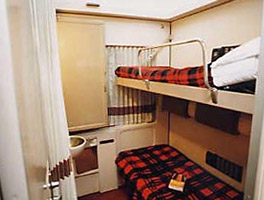
Cabins are comfortable and sleep two persons in fold down seat beds.  Interconnceting door allows one large cabin for children or 4. All linen is provided and there is a small washhand basin and towel provided. Attendants will come when you press the button to turn down and make your beds when you choose.

Each cabin starting the journey has a sofa for two persons. After having dinner, the car steward turns the sofa into two beds. The cabin has a basin with hot & cold water, a razor shaving point, two towels, buttons for controlling heating, music & lights, 2 coat hangers, individual reading lights and 2 dining tables.


Toilets are located at each end of the sleeper section and all cabins have hangers to hang a few clothes and a large overhead luggage compartment.

Dinner is served in your cabin on leaving the station, consisting of a basic hot meal of rice, meat, pasta, bread and potatoes served with tea or coffee and a piece of fruit.

There is a smoking carriage in the middle of the sleeper section where hot and cold drinks and small snacks can also be bought.

Wake up call for Luxor is at 04.00 giving passengers time to wash and dress and have breakfast consisting of bread and cheese, croissant and jam and honey and a Danish pastry served with coffee and tea.

The train arrives in Luxor Main Station at 05.15 hrs and 07.10 hrs.


Schedule and Prices
Schedule here:

Egyptian train booking times and fares info 
Book here:

Saturday, April 21, 2012

Importing a car into Egypt


Private vehicles are allowed to be imported on the condition that they are manufactured and imported in the same year. The cars may not be used or second-hand. An exception will be made for those cars imported in the name of patients or the handicapped, in accordance with the provisions of Customs exemption no. 186 of 1986 and its executive list. Cars are subject to customs categorization based on engine capacity.

Sales Tax

15% sales tax 40% customs charge up to 1000 cc
15% sales tax 55% customs charge between 1000 and 1300 cc
15% sales tax 100% customs charge between 1300 and 1600 cc
30% sales tax 135% customs charge between 1600 and 2000 cc
45% sales tax 135% customs charge More than 2000 cc

Capacity Private cars must not have a capacity exceeding 9 persons, nor can they have been manufactured with a greater capacity and subsequently have had seats removed. The original car license or a sealed certificate issued by any foreign traffic authority will be accepted as proof of ownership. This will not need validating as long as it states car ownership.Those cars equipped for medical purposes and arriving in the name of patents and the handicapped will, once inspected, be exempt from customs on the following conditions:

• Presentation of a medical report from the General Medical Board with the personal details of the patient or handicapped person, case determination and medical equipment.

• The equipment subject to exemption must be imported in the patient’s name.

• The car must be a small model with an engine capacity not in excess of 1,500 cc and 4 seats.

• The value of the car must not exceed 12,000 LE for ordinary disabilities or 15,000 LE for a person disabled as a result of a work injury. The disability must not be less than 35% and be proven by a report from the committee concerned in the General Administration of Health Insurance.

• In the event of the value of the car exceeding the aforementioned quantities, then the exemptions will meet the said values.

• The car may not be involved in any legal negotiations (sale, mortgage, etc.) for the period of 5 years starting from the date of release from Customs, except through payment of customs (and any other) taxes or fees from which it has been exempted. Once this period of time has passed, the owner is free to negotiate with the car, or purchase another medically equipped car also valid for exemptions. Any negotiation with the vehicle before the 5 years have passed, without notifying the Customs authorities or paying the Customs tax or any other tax, will be considered an evasion of Customs.

Temporary release

The release of cars belonging to Egyptians residing abroad, tourists, and transit travelers coming to spend a short period in the country within the limits of the residence period (maximum 6 months) after one year.After this period, the cars may be deposited inside the Customs zone prepared for this purpose, or exported from the country. These cars will not be granted release again (on a temporary basis) until a period of time similar to that spent inside the country, has passed.In return for the service provided for 3 months, or part thereof, the fees charged are as follows.

up to 1600 cc - 250 LE
between 1600 and 2000 cc - 500 LE
More than 2000 - 1000 LE

Cars accompanying tourist groups will be exempted if the stay does not exceed 1 month. The fees will be reduced to 100 LE.Cars running on diesel accompanying tourist groups will be authorized entry into the country, as well as 4-wheel drive vehicles.Furthermore, after getting authorization from the Military Intelligence Office, private cars will be temporarily released with suspension of payment of Customs tax and other taxes and fees. The suspension is conditional to the following:

• Insurance should be paid in cash or though a bank guarantee, including all relevant taxes and fees, in order to obtain Form 93 K.M with the details of the car.

• An international license from one of the automobile clubs or an authorized tourist company in Egypt.

• A written statement of responsibility from one of the Ministries or government bodies or official academic institutions to pay the tax if the car is not re-exported. This also applies to the cars of foreign experts brought by any of the Ministries.

• The Diplomatic Corps will take full responsibility of those diplomats’ cars which exceed the permitted length of stay. This also applies to the cars of foreign VIPs residing temporarily in Egypt.

• A written statement of responsibility from the Office of Tourism is needed for the cars of tourists coming as groups with international licenses.

• Regarding the temporary release of cars of Arab and foreign students in universities and institutions in Egypt: 250 LE will be paid every 3 months for cars with a capacity of no more than 1,600 cc.


Tuesday, April 17, 2012

St Catherines bedouin medicinal herb growers

All around Saint Catherine, in tiny spring-fed gardens, the Jabaliya Bedouin are cultivating medicinal plants. Just 10 years ago this was unheard of. Then in 2003, the MPCP (Medicinal Plants Conservation Project) began surveying the mountains for medicinal plants. 

By 2005 word had spread that the project’s micro-financing offshoot, the MPA (Medicinal Plants Association), with its dark-roofed greenhouses down in Saint Catherine, was offering good money for thyme, rosa arabica, anise and oregano. 

What had been worthless goat fodder growing between granite and basalt was now a cash crop. It could even be more lucrative than marijuana, and maybe even more than opium.


Ahmed Saleh is an herbalist. He also runs the MPA. Three of us are sitting in his low-ceiling living room in Saint Catherine, South Sinai, while Saleh wordlessly mixes a yellow powder concoction with store-bought honey. The mustard-yellow paste goes into small glass jars.


“This one is going to Israel,” he says, holding a finished product to the light. “A man has ordered ten.”
But his friend Soliman Mahmoud is doing most of the talking. Saleh has asked him to drop by for tea and explain to the reporter the healing powers of the local plants. The living room’s mood has turned fervent.
“Some people believe easily,” says Mahmoud, who works as a guide at Saint Catherine Monastery. “But not me. I didn’t believe what people said about medicinal plants at first.
“Then my child was sick,” he continues. “He was two years old and four months. I took him to the doctor and they gave him antibiotic injections. But after 10 days he would be sick again. Eventually I did not have enough money and I was going to sell my car and take my child to the big hospital in Cairo. The local doctor gave us a referral to a specialist.”


As it happened, the night before he left for Cairo he visited Saleh for dinner. Saleh caught wind of his plans and urged him to cancel the doctor’s appointment. He did. Then Saleh gave him a jar of the mustard-yellow paste. Mahmoud fed it to his son. The boy’s health improved dramatically overnight. Cynical Mahmoud became a believer.

Sinai, says Saleh, has 472 plant species — and more than 100 are used as medicine. Forty-two of these are endangered and 14 are endemic. 

 The harsh conditions have favored species that evolve to specialize in limited, niche conditions.  As a result, it is one of Egypt’s most bio-diverse areas.
Today there are 60 Bedouin gardens growing plants for the MPA, Saleh says. The association fosters seedlings in Saint Catherine, and then distributes the young plants to the surrounding gardens. Some are nearby, others are working far-flung wells. The plants are then harvested and processed by a team of female MPA employees in Saint Catherine. They are blended, packaged, branded and marketed.


A 20-gram tea blend of rosemary, peppermint and other herbs retails for LE20, while 400 grams of the raw plant stuff costs about LE25 — a 1,600 percent mark-up. The 250-gram jar of mustard-yellow paste — containing anise, ginger, rosemary, oregano and 10 other ingredients — is about LE100. Most of the product is sold domestically, though some will go to neighboring Gulf countries and Europe.

The MPA takes a 10 percent commission of the profit and the rest goes to the growers. Medicinal herbs are a rare good news story for the Sinai economy. Last winter’s rains failed, a late frost scorched the almond blossoms and tourism numbers are way down. Mahmoud says he is finding it hard to support his family on his earnings as a tour guide. They may move to Suez or somewhere else on the coast, where maybe they can catch and sell fish.
You don’t have to believe in the herbs’ healing powers to have faith in the business model.

But according to Saleh and Mahmoud, there is also plenty of strong anecdotal evidence in favor of swapping aspirin for an herbal-brewed tea, or Panadol for the massage oil.

“Many in Egypt have colon problems because of their diet,” says Saleh. “They eat a lot of oil — falafel, shawarma, chips. The Bedouin also have lots of kidney problems and need dialysis.”

Saleh has prescriptions for eczema, hair loss, fish and lactose allergies, immune deficiency, high salt levels and rheumatism. There’s even an herbal Viagra. Tiny dark jars of 40 blended oils, sandwich bags of powders and salves of royal jelly pile into the dark corners of the living room. They will be sold in the shop down the road. From starting life in remote mountain valleys, the herbs see out their days on a dresser in a dim Cairo bedroom, or lugged across the globe in a backpack.


The MPA parent project, the MPCP, was established with an 8 million-euro grant from the Global Environmental Facility — a UNDP-UNEP, World Bank environmental fund. It sought to graft Bedouin lore onto a Western micro-finance model — and to combine botanical textbook knowledge with Bedouin oral learning. In nine years of the project, feral donkeys have been trucked off to Giza Zoo, (apparently solving the donkey problem), abandoned orchards revived as herb farms, and the seeds of rare medicinal species deposited in the vaults of the Cairo gene bank.

And sometimes, under the MPCP greenhouse plastic, vanished strains have returned.
“The old people tell me that there used to be lots of herbs growing at a remote spot,” says Saleh. “So I go to these areas and find goat dung. Sometimes it’s up to 60 years old. I take the dung, water it and seeds grow. They can stay inside the dung for 100 years and grow again.”

In 2012, the MPCP was awarded the US$5,000 UNDP Equator Prize for its work in preserving genetic heritage.

But the seed funding will run out this June and the project will be turned over to the Environment Ministry. The MPCP will remain an NGO, says project manager Adel Soliman. Its 12 employees will keep their jobs.

The MPA, however, will remain independent from the government. Thanks to its share of profits, the offshoot is self-sustaining.

Paramotor in Ain Sokhna Egypt


Friday the 20th of April, all our clients are invited to come and try the first PARAMOTOR tandem flying experience in Egypt.

Itinerary in Brief:
----------------------

Meet in front of Baron Palace at 7am and head towards Al Ain Al Sokhna. Expected to return around 8pm.
Reach Sokhna, listen to your instructions CAREFULLY, cause you are taking off :D and fly on top of Attaka mountains and the beach.
Other fun activities available: including Go Karting and food competition ;)

Trip Difficulty Level: Intro. & Intermediate. But requires a brave heart.
--------------------------
No experience required.


Price:
-------
The bus ride is free to all members of our loyalty programs, holders of our
Loyal Card, Upgraded Loyal Card, also Silver, Gold & Platinum members.

Tandem Paramotor Experience: EGP550 per person. With 25% discount for our loyal card holders.

Check the website www.paramotoregypt.com for more information.


Reservation:
----------------
Call +2012 74322400 from 9am to 5pm Sunday to Thursday.
Or send us an email saying: “I'm loyal and I wanna fly” to sales@holiday.com.eg


Sunday, April 15, 2012

Recharge-Top up mobiles abroad in 3 easy steps with 1st top up FREE!

FROM YOUR PC

Enter the name and number of the person that you would like to send recharge load to.


send screen 01

Pick an amount to send and give us the name that will appear with the recharge load.


send screen 02

That's it. Your recharge load is sent.


send screen 03

Send Now


FROM YOUR PHONE


Sending via SMS available in the U.S. and Canada only.


Send 01163
9152225512

Send your message to Aryty at shortcode.

Text: + < recipient's mobile number>


Remember: Send your text message to Aryty -- not your friend's mobile number.
To snd to 152225512 rply w/204 letter
a)$2.00
b)$4.00
c)$8.00
d)$12.00

You will receive a message from Aryty with a unique ID...

...And a choice of 4 amounts of credit.

204 b

To snd to 152225512 rply w/204 letter

Thank you! Transaction 55434 complete. View your account history at aryty.com

Thats it!

We'll confirm we got the message.

Your friend or family will receive the recharge load almost instantly.

Send Now

Click here to try it now