|
| ||||||||||||||||||||
|
| ||||||||||||||||||||
|
| ||||||||||||||||||||
|
| ||||||||||||||||||||
|
| ||||||||||||||||||||
|
| ||||||||||||||||||||
|
| ||||||||||||||||||||
|
| ||||||||||||||||||||
|
| ||||||||||||||||||||
|
| ||||||||||||||||||||
|
| ||||||||||||||||||||
|
| ||||||||||||||||||||
|
| ||||||||||||||||||||
| |||||||||||||||||||||
Saturday, April 30, 2011
Egyptian Cabinet of ministers
Egyptian Cabinet of Ministers


Egyptian Legal System
All you need to know about Egyptian Legal System and Penal Code.
Link to Egyptian legal system
Introduction:
The Egyptian Legal System
The Executive Power
The President
Cabinet
The Prime Minister
Ministries
The Legislative Power: Parliament
People's Assembly
Jurisdiction
Bodies
Committees
Shura Council
Conditions of Candidature
Term of Membership and Activities
The Judicial Power
Court System
The Supreme Constitutional Court
Court of Cassation
Court of Appeal
Court of First Instance
Family Court
Egyptian State Lawsuits Authority
Public Prosecution
Administrative Courts (State Council)
Courts Jurisdiction
Arbitration
Enforcement of Judgments and Appeal
Enforcement of Arbitral Awards
Primary materials
Political Parties
Major Parties
Minor Parties
Governorates
Official Websites
Inter-Government Organizations
Law Faculties (Public Universities)
Important Libraries
Legal Guides
Link to Egyptian legal system
Introduction:
The Egyptian Legal System
The Executive Power
The President
Cabinet
The Prime Minister
Ministries
The Legislative Power: Parliament
People's Assembly
Jurisdiction
Bodies
Committees
Shura Council
Conditions of Candidature
Term of Membership and Activities
The Judicial Power
Court System
The Supreme Constitutional Court
Court of Cassation
Court of Appeal
Court of First Instance
Family Court
Egyptian State Lawsuits Authority
Public Prosecution
Administrative Courts (State Council)
Courts Jurisdiction
Arbitration
Enforcement of Judgments and Appeal
Enforcement of Arbitral Awards
Primary materials
Political Parties
Major Parties
Minor Parties
Governorates
Official Websites
Inter-Government Organizations
Law Faculties (Public Universities)
Important Libraries
Legal Guides
Purchasing property in Sinai
Legal Procedures to Purchase a Property in Sinai
Purchasing a property in Sinai is different than purchasing a property in any different location in Egypt, according to the difference in legal status. There was an administrative decree issued by the prime minister of Egypt in 2005, abrogating the context of the previous law issued in 1996. Despite the fact that originally an administrative decree is normally unable to nullify law, but this decree is currently the prevalent decree governing the foreigners? legal status when it comes to purchasing a property in Sinai.
The aforementioned decree states that foreigner purchasers in Sinai may not be granted the right to be "landlords" on the properties they purchase, but only would have the "Freehold" right, for the maximum time of 99 years, and since the term "Freehold" originally applies to the right to enjoy a property and all its advantages for good, in addition to the right of disposal, either physical or legal disposal, and since the decree has stated the maximum limit of freehold as 99 years, therefore ? legally talking ? it is NOT freehold, it is better to be rephrased to "Usufruct". Usufruct is the best description for the current real estate sales legal name involving foreigners in Sharm el Sheikh, and it, consequently, raises many questions concerning registration of the sale.
Definitions of usufruct on the Web:
? Usufruct is the legal right to use and derive profit from property that belongs to another person, as long as the property is not damaged. In many legal systems of property, buyers of property may only purchase the usufruct of the property.
en.wikipedia.org/wiki/Usufruct
Property Ownership in Law
The ownership of land by foreigners is governed by three laws: Law No. 15 of 1963, Law No. 143 of 1981 and Law No. 230 of 1996.
Law No. 15 of 1963
Law No. 15 and its amendments (Law 104 of 1985) provides that no foreigners, whether natural or legal persons, may acquire agricultural land.
Law No. 143 of 1981
Law No. 143 and its amendments (55/1988, 205/1991, & 96/1995) governs the acquisition and ownership of desert land. Certain limits are placed on the number of feddans (one feddan is equal to approximately one hectare) that may be owned by individuals, families, co-operatives, partnerships and corporations. Partnerships are permitted to own 10,000 feddans, provided that the individual shall not own more then 150 feddans. Joint stock companies are permitted to own 50,000 feddans.
Partnerships and joint stock companies may own desert land within these limits even if foreign partners or shareholders are involved, provided that at least 51 percent of the capital is owned by Egyptians. However, upon liquidation of the company, the land must revert to Egyptians. Article 1 of Law No. 143 defines desert land as the land two kilometers outside the border of the city.
Further, the lease of such land for more than a period of 50 years shall also be considered to be ownership under Law 143. Despite the fact that companies which were formed under the Investment Law No. 8/1997 do not require Egyptian participation, companies that undertake projects over desert land must be owned in their majority by Egyptians. According to the law 55 of 1988, the President of the Republic may decide to treat Arab nationals as Egyptian nationals for purposes of this law.
Law No. 230 of 1996
On July 14, Law No. 230 of 1996 was issued superseding Law No. 56 of 1988. The new law allows non-Egyptians to own real estate whether built or vacant with the following conditions:
1. That ownership be limited to only two real estate properties throughout Egypt for accommodation purposes of the person and his family (family meaning spouses and minors), in addition to the right to own real estate needed for activities licensed by the Egyptian Government.
2. That the area of each real estate not be in excess of four thousand square meters.
3. That the real estate is not a historical site.
Exemption from first and second conditions is subject to the approval of the Prime Minister. Ownership in tourist areas and new communities is subject to conditions established by the Cabinet of Ministers.
Furthermore, non-Egyptians owning vacant real estate in Egypt must build within a period of five years from the date their ownership is effective (the date on which the realty is recorded at the competent Notary Public Office). Non-Egyptians may only sell their real estate five years after registration of ownership, unless the consent of the Prime Minister is obtained.
Registration, in principle, is this process done in the notary office, to register your sale contract, as a deed, and a proof of owning a property. Since the aforementioned decree stated that foreigners are not granted the rights to be landlord, then it is not allowed for foreigners to register their properties, while practically, even Egyptians are not allowed to register their properties in Sinai. Therefore there has been an urgent need to find an alternative legal method to suit the new status of foreigners in Sinai post the prime minister's decree.
The only option available for foreigner purchasers in Sinai is a legal suit called "Signature Validity".
Signature Validity legal suit, however, is a legal suit aims to obtain a court verdict, stating that the signature of the seller in a sale / usufruct contract, is truly theirs.
This legal suit, however, DOES NOT touch on the origin of right, or in other words; it is non-concerned about neither who is the current owner of the property, nor who was the previous owner, but is only concerned about the belonging of the signature to the seller, and therefore is a mere precautionary legal suit. This legal suit, however, is the common suit used for sales and usufructs in Sinai, and it has a legal value after all, despite the fact of not being as valuable and authenticated as registration.
Purchasers should take the following procedures into their consideration while purchasing a property in Sharm el Sheikh:
A) Obtaining a real estate certificate and a tax certificate for the property:
Purchaser's lawyer should obtain a "NEGATIVE" certificate for the property from the government, stating that there are no mortgages, pledges, or any other sort of rights arranged to any other party on the desired property. The certificate must be governmental and stamped with the official stamp of the state. Also a certificate must be obtained from the tax authorities determining the exact due taxes on the desired property. There has been a wide-spread myth stating that there are no taxes due on Sharm el Sheikh's properties. The truth, however, is that THERE ARE taxes estimated on each property in Sharm el Sheikh. Those taxes vary in value according to the original usage of the property. Purchasers are requested to consult their lawyer in order to handle the taxes issue. Taxes can be reduced to almost 60 EGP in case if the property is used for the sole purpose of residence, while these taxes would be higher in case if the property was used for the purpose of renting out.
B) Articulating a precise and bilingual sale / usufruct contract:
Sale / Usufruct is actually all about the contract, and therefore it is imperative for a purchaser to have a precise and detailed contract, defining the property boundaries in a definitive manner, purchase price, how did the property evolved to the previous owner, method of payment?etc.
This contract should be articulated in both Arabic and English languages, and it must be taken into consideration that the only authenticated and recognized language in courts is the Arabic language, and consequently English is used for the mere purpose of guidance. Here is a golden advice: NEVER sign a contract which was articulated only in English or any other languages than Arabic when it comes to purchase a property in Egypt, or you will be in serious risk.
C) Authenticating Sale / Usufruct Contract:
Prior to the point of authenticating Sale / Usufruct contract, purchasers are required to issue a power of attorney to their lawyer, in order to be able to act on their behalf in courts. Power of attorney, however, requires the purchaser "Principal" to obtain a multi-entry visa from El Tur city, which is located not far from Sharm el Sheikh, and where all the governmental utilities for Sharm el Sheikh's area are located. After obtaining the power of attorney from the notary office, the lawyer is responsible for establishing the signature validity legal suit. This legal suit takes between 6-8 months before obtaining the final verdict from the court.
These were simply the imperative steps needed to purchase a real estate property in Sinai, which in practice are not any different between Egyptians and foreigners, Except for the fact that Egyptians are entitled to choose between having a sale or usufruct contract, while foreigners have the sole choice of having a usufruct contract.
Appendix
It must be mentioned that Egypt has replaced its old method of registration in Sinai for taking a percent equals to 3% of the purchase price as fees for notarizing a contract. The new policy is to take a certain amount of funds not exceeding 2000 EGP as fees for the registration process, regardless of the purchase price of the sold property.
It must also be emphasized that other types of legal suits which purpose to prove the transfer the ownership are invalid whenever a foreigner party is included i.e. Contract Validity legal suit. This legal suit is available only in case if the purchaser was the first purchaser, and when the seller is the government or a governmental utility. There is NO PERCENT taken by the government for the signature validity legal suit, but only administrative fees, which shall be included in the attorney fees.
Purchasing a property in Sinai is different than purchasing a property in any different location in Egypt, according to the difference in legal status. There was an administrative decree issued by the prime minister of Egypt in 2005, abrogating the context of the previous law issued in 1996. Despite the fact that originally an administrative decree is normally unable to nullify law, but this decree is currently the prevalent decree governing the foreigners? legal status when it comes to purchasing a property in Sinai.
The aforementioned decree states that foreigner purchasers in Sinai may not be granted the right to be "landlords" on the properties they purchase, but only would have the "Freehold" right, for the maximum time of 99 years, and since the term "Freehold" originally applies to the right to enjoy a property and all its advantages for good, in addition to the right of disposal, either physical or legal disposal, and since the decree has stated the maximum limit of freehold as 99 years, therefore ? legally talking ? it is NOT freehold, it is better to be rephrased to "Usufruct". Usufruct is the best description for the current real estate sales legal name involving foreigners in Sharm el Sheikh, and it, consequently, raises many questions concerning registration of the sale.
Definitions of usufruct on the Web:
? Usufruct is the legal right to use and derive profit from property that belongs to another person, as long as the property is not damaged. In many legal systems of property, buyers of property may only purchase the usufruct of the property.
en.wikipedia.org/wiki/Usufruct
Property Ownership in Law
The ownership of land by foreigners is governed by three laws: Law No. 15 of 1963, Law No. 143 of 1981 and Law No. 230 of 1996.
Law No. 15 of 1963
Law No. 15 and its amendments (Law 104 of 1985) provides that no foreigners, whether natural or legal persons, may acquire agricultural land.
Law No. 143 of 1981
Law No. 143 and its amendments (55/1988, 205/1991, & 96/1995) governs the acquisition and ownership of desert land. Certain limits are placed on the number of feddans (one feddan is equal to approximately one hectare) that may be owned by individuals, families, co-operatives, partnerships and corporations. Partnerships are permitted to own 10,000 feddans, provided that the individual shall not own more then 150 feddans. Joint stock companies are permitted to own 50,000 feddans.
Partnerships and joint stock companies may own desert land within these limits even if foreign partners or shareholders are involved, provided that at least 51 percent of the capital is owned by Egyptians. However, upon liquidation of the company, the land must revert to Egyptians. Article 1 of Law No. 143 defines desert land as the land two kilometers outside the border of the city.
Further, the lease of such land for more than a period of 50 years shall also be considered to be ownership under Law 143. Despite the fact that companies which were formed under the Investment Law No. 8/1997 do not require Egyptian participation, companies that undertake projects over desert land must be owned in their majority by Egyptians. According to the law 55 of 1988, the President of the Republic may decide to treat Arab nationals as Egyptian nationals for purposes of this law.
Law No. 230 of 1996
On July 14, Law No. 230 of 1996 was issued superseding Law No. 56 of 1988. The new law allows non-Egyptians to own real estate whether built or vacant with the following conditions:
1. That ownership be limited to only two real estate properties throughout Egypt for accommodation purposes of the person and his family (family meaning spouses and minors), in addition to the right to own real estate needed for activities licensed by the Egyptian Government.
2. That the area of each real estate not be in excess of four thousand square meters.
3. That the real estate is not a historical site.
Exemption from first and second conditions is subject to the approval of the Prime Minister. Ownership in tourist areas and new communities is subject to conditions established by the Cabinet of Ministers.
Furthermore, non-Egyptians owning vacant real estate in Egypt must build within a period of five years from the date their ownership is effective (the date on which the realty is recorded at the competent Notary Public Office). Non-Egyptians may only sell their real estate five years after registration of ownership, unless the consent of the Prime Minister is obtained.
Registration, in principle, is this process done in the notary office, to register your sale contract, as a deed, and a proof of owning a property. Since the aforementioned decree stated that foreigners are not granted the rights to be landlord, then it is not allowed for foreigners to register their properties, while practically, even Egyptians are not allowed to register their properties in Sinai. Therefore there has been an urgent need to find an alternative legal method to suit the new status of foreigners in Sinai post the prime minister's decree.
The only option available for foreigner purchasers in Sinai is a legal suit called "Signature Validity".
Signature Validity legal suit, however, is a legal suit aims to obtain a court verdict, stating that the signature of the seller in a sale / usufruct contract, is truly theirs.
This legal suit, however, DOES NOT touch on the origin of right, or in other words; it is non-concerned about neither who is the current owner of the property, nor who was the previous owner, but is only concerned about the belonging of the signature to the seller, and therefore is a mere precautionary legal suit. This legal suit, however, is the common suit used for sales and usufructs in Sinai, and it has a legal value after all, despite the fact of not being as valuable and authenticated as registration.
Purchasers should take the following procedures into their consideration while purchasing a property in Sharm el Sheikh:
A) Obtaining a real estate certificate and a tax certificate for the property:
Purchaser's lawyer should obtain a "NEGATIVE" certificate for the property from the government, stating that there are no mortgages, pledges, or any other sort of rights arranged to any other party on the desired property. The certificate must be governmental and stamped with the official stamp of the state. Also a certificate must be obtained from the tax authorities determining the exact due taxes on the desired property. There has been a wide-spread myth stating that there are no taxes due on Sharm el Sheikh's properties. The truth, however, is that THERE ARE taxes estimated on each property in Sharm el Sheikh. Those taxes vary in value according to the original usage of the property. Purchasers are requested to consult their lawyer in order to handle the taxes issue. Taxes can be reduced to almost 60 EGP in case if the property is used for the sole purpose of residence, while these taxes would be higher in case if the property was used for the purpose of renting out.
B) Articulating a precise and bilingual sale / usufruct contract:
Sale / Usufruct is actually all about the contract, and therefore it is imperative for a purchaser to have a precise and detailed contract, defining the property boundaries in a definitive manner, purchase price, how did the property evolved to the previous owner, method of payment?etc.
This contract should be articulated in both Arabic and English languages, and it must be taken into consideration that the only authenticated and recognized language in courts is the Arabic language, and consequently English is used for the mere purpose of guidance. Here is a golden advice: NEVER sign a contract which was articulated only in English or any other languages than Arabic when it comes to purchase a property in Egypt, or you will be in serious risk.
C) Authenticating Sale / Usufruct Contract:
Prior to the point of authenticating Sale / Usufruct contract, purchasers are required to issue a power of attorney to their lawyer, in order to be able to act on their behalf in courts. Power of attorney, however, requires the purchaser "Principal" to obtain a multi-entry visa from El Tur city, which is located not far from Sharm el Sheikh, and where all the governmental utilities for Sharm el Sheikh's area are located. After obtaining the power of attorney from the notary office, the lawyer is responsible for establishing the signature validity legal suit. This legal suit takes between 6-8 months before obtaining the final verdict from the court.
These were simply the imperative steps needed to purchase a real estate property in Sinai, which in practice are not any different between Egyptians and foreigners, Except for the fact that Egyptians are entitled to choose between having a sale or usufruct contract, while foreigners have the sole choice of having a usufruct contract.
Appendix
It must be mentioned that Egypt has replaced its old method of registration in Sinai for taking a percent equals to 3% of the purchase price as fees for notarizing a contract. The new policy is to take a certain amount of funds not exceeding 2000 EGP as fees for the registration process, regardless of the purchase price of the sold property.
It must also be emphasized that other types of legal suits which purpose to prove the transfer the ownership are invalid whenever a foreigner party is included i.e. Contract Validity legal suit. This legal suit is available only in case if the purchaser was the first purchaser, and when the seller is the government or a governmental utility. There is NO PERCENT taken by the government for the signature validity legal suit, but only administrative fees, which shall be included in the attorney fees.
Harleys in Sinai
Harley owners storm the desert By Schams Elwazer, CNN
April 8, 2010 -- Updated 1635 GMT (0035 HKT)
STORY HIGHLIGHTS
CNN's Schams Elwazer takes her maiden trip on a Harley Davidson
Inside the Middle East joins the first Harley Owners Group rally in Egypt
200 bikers ride the American icon on a 460 kilometer route
(CNN) -- It was my first time on a Harley Davidson and I'll admit I was more than a little nervous.
I had only known for two minutes the man in whose hands (and riding ability) I was entrusting my life. It didn't help that camerawoman Raja Razek kept whizzing past at up to 160 kilometers per hour on the back of another Harley; my heart skipped several beats as I watched her contort into frighteningly precarious positions to get the best camera angles.
We were in Sharm El Sheikh in south Sinai to cover Egypt's First International HOG (Harley Owners Group) rally for April's edition of Inside the Middle East.
Ahead of the 7 a.m. start time, the sight was surreal -- 167 Harley Davidsons, a classic American icon, chrome glinting in the rays of the Sinai sunrise. A slice of pure Americana in Egypt as 200 people prepared to cruise through the 461 kilometer route.
The excitement was palpable as everyone made final tweaks, tightening bolts and wiping down mudguards; all decked out in the finest biker gear -- the ubiquitous leather jacket, bandanas, studded boots, designer sunglasses and even some chaps.
Video: Harleys in Sinai The smell: a heady cocktail of leather, exhaust fumes and asphalt, topped off with strong doses of testosterone and adrenaline.
At first we couldn't get over how un-Middle Eastern the whole thing seemed. But this faded. We could see blue glass "evil eyes" on the handlebars (good luck charms). Flags from all over the region flapped in the hot wind; bikers came from Bahrain, Jordan, Lebanon, Kuwait, Qatar, Saudi Arabia, Syria, Turkey, the UAE, and a handful of Europeans and Americans.
Then we hit the road, led by a full police escort.
"It's the closest you can get to flying," says Indjy Ghattas, a young Egyptian woman who is not only one of the few women riders in the country but is also the Harley Davidson dealer in Egypt and the organizer of the whole event. "It's the sound of engine, the vibration, the feel of it."
The roaring sound of a large pack of Harleys revving up and hitting the pavement is rather intimidating for the uninitiated. You don't hear it as much as feel it coming up through the ground.
We snaked along the winding road out of the city and into the ancient land of Moses. The terrain is vast, rugged and beautiful; the mountains streaked with lines of green, yellow, red and black.
Fifty-five-year old Egyptian-American Sherif Begermi is a veteran biker and looks the part -- white goatee, denim jacket with patches from various Harley events, and a stars and stripes bandana.
"When we first started riding [in Egypt], people didn't know what to make of us," says Begermi. "Police would stop us to ask us 'what are you?' Not 'who are you?' but 'what are you'?"
As we rode through Sinai's villages, I'm not sure the stunned but amused-looking onlookers knew what to make of us either. Sheepherders, women walking their kids out of school, men coming out of mosques. Everyone stopped in their tracks and smiled in wonder. A few waved.
Even a herd of camels on the side of the road stared in confusion at the sight of these strange shiny monsters roaring through the terrain.
At a stop for gasoline, we caught up with some of the riders.
Lana Medawar rode on the back of her husband's bike all the way from Beirut -- a 1200 kilometer trek. "I'm planning to learn how to ride myself, not only be a passenger behind my husband."
Ghattas says the passion is slowly catching on with women. "When I have a woman buying a bike I'm like the happiest person on earth."
Mohamed Fahmy rides with daughter Sherifa in the backseat in a pink Harley T-shirt. Asked if she plans to ride, both smile as dad says "Soon - hopefully not too soon... She wants to take my bike."
In contrast to the stereotypical image of HOG riders as outlaws, this event feels like a family affair and HOG enthusiasts say it is part of what makes Harley unique.
"Harley Davidson is a culture, it's a community," says Ahmed Mourad as he pays a gas station attendant. "Other motorcycles are only motorcycles."
Swiss-Egyptian Sherif Loutfi says he rode Japanese bikes (what HOG riders like to call "riceburners") for a decade but switched to the Harley three years ago. "They call it a mid-life crisis," jokes Loutfi.
Halfway through the ride, we stop for lunch near of Saint Catherine's monastery at the foot of biblical Mount Sinai and everyone takes a much-needed reprieve from the kidney-rattling ride.
Leather jackets come off to reveal back braces. Conversations turn to day-jobs. Most of the riders are "weekend warriors," spending most of their days as upper-middle class businessmen; jewelry dealers, hotel managers, bankers and other white-collar professionals.
As fun as the ride is, one must take note of the fact that this is a hobby for the well-off. Even the cheapest Harley costs more than the average Egyptian makes in a year. Many riders we met own more than one bike and acknowledge the fact that, financially, this is a relatively exclusive club.
But Ghattas says Harley culture shouldn't be measured in dollars. "It's not a cheap hobby but it's not as expensive as people think."
"It's more than just an expensive toy," she says. "It's a dream."
http://edition.cnn.com/2010/WORLD/meast/04/08/harley.rally.egypt/index.html
April 8, 2010 -- Updated 1635 GMT (0035 HKT)
STORY HIGHLIGHTS
CNN's Schams Elwazer takes her maiden trip on a Harley Davidson
Inside the Middle East joins the first Harley Owners Group rally in Egypt
200 bikers ride the American icon on a 460 kilometer route
(CNN) -- It was my first time on a Harley Davidson and I'll admit I was more than a little nervous.
I had only known for two minutes the man in whose hands (and riding ability) I was entrusting my life. It didn't help that camerawoman Raja Razek kept whizzing past at up to 160 kilometers per hour on the back of another Harley; my heart skipped several beats as I watched her contort into frighteningly precarious positions to get the best camera angles.
We were in Sharm El Sheikh in south Sinai to cover Egypt's First International HOG (Harley Owners Group) rally for April's edition of Inside the Middle East.
Ahead of the 7 a.m. start time, the sight was surreal -- 167 Harley Davidsons, a classic American icon, chrome glinting in the rays of the Sinai sunrise. A slice of pure Americana in Egypt as 200 people prepared to cruise through the 461 kilometer route.
The excitement was palpable as everyone made final tweaks, tightening bolts and wiping down mudguards; all decked out in the finest biker gear -- the ubiquitous leather jacket, bandanas, studded boots, designer sunglasses and even some chaps.
Video: Harleys in Sinai The smell: a heady cocktail of leather, exhaust fumes and asphalt, topped off with strong doses of testosterone and adrenaline.
At first we couldn't get over how un-Middle Eastern the whole thing seemed. But this faded. We could see blue glass "evil eyes" on the handlebars (good luck charms). Flags from all over the region flapped in the hot wind; bikers came from Bahrain, Jordan, Lebanon, Kuwait, Qatar, Saudi Arabia, Syria, Turkey, the UAE, and a handful of Europeans and Americans.
Then we hit the road, led by a full police escort.
"It's the closest you can get to flying," says Indjy Ghattas, a young Egyptian woman who is not only one of the few women riders in the country but is also the Harley Davidson dealer in Egypt and the organizer of the whole event. "It's the sound of engine, the vibration, the feel of it."
The roaring sound of a large pack of Harleys revving up and hitting the pavement is rather intimidating for the uninitiated. You don't hear it as much as feel it coming up through the ground.
We snaked along the winding road out of the city and into the ancient land of Moses. The terrain is vast, rugged and beautiful; the mountains streaked with lines of green, yellow, red and black.
Fifty-five-year old Egyptian-American Sherif Begermi is a veteran biker and looks the part -- white goatee, denim jacket with patches from various Harley events, and a stars and stripes bandana.
"When we first started riding [in Egypt], people didn't know what to make of us," says Begermi. "Police would stop us to ask us 'what are you?' Not 'who are you?' but 'what are you'?"
As we rode through Sinai's villages, I'm not sure the stunned but amused-looking onlookers knew what to make of us either. Sheepherders, women walking their kids out of school, men coming out of mosques. Everyone stopped in their tracks and smiled in wonder. A few waved.
Even a herd of camels on the side of the road stared in confusion at the sight of these strange shiny monsters roaring through the terrain.
At a stop for gasoline, we caught up with some of the riders.
Lana Medawar rode on the back of her husband's bike all the way from Beirut -- a 1200 kilometer trek. "I'm planning to learn how to ride myself, not only be a passenger behind my husband."
Ghattas says the passion is slowly catching on with women. "When I have a woman buying a bike I'm like the happiest person on earth."
Mohamed Fahmy rides with daughter Sherifa in the backseat in a pink Harley T-shirt. Asked if she plans to ride, both smile as dad says "Soon - hopefully not too soon... She wants to take my bike."
In contrast to the stereotypical image of HOG riders as outlaws, this event feels like a family affair and HOG enthusiasts say it is part of what makes Harley unique.
"Harley Davidson is a culture, it's a community," says Ahmed Mourad as he pays a gas station attendant. "Other motorcycles are only motorcycles."
Swiss-Egyptian Sherif Loutfi says he rode Japanese bikes (what HOG riders like to call "riceburners") for a decade but switched to the Harley three years ago. "They call it a mid-life crisis," jokes Loutfi.
Halfway through the ride, we stop for lunch near of Saint Catherine's monastery at the foot of biblical Mount Sinai and everyone takes a much-needed reprieve from the kidney-rattling ride.
Leather jackets come off to reveal back braces. Conversations turn to day-jobs. Most of the riders are "weekend warriors," spending most of their days as upper-middle class businessmen; jewelry dealers, hotel managers, bankers and other white-collar professionals.
As fun as the ride is, one must take note of the fact that this is a hobby for the well-off. Even the cheapest Harley costs more than the average Egyptian makes in a year. Many riders we met own more than one bike and acknowledge the fact that, financially, this is a relatively exclusive club.
But Ghattas says Harley culture shouldn't be measured in dollars. "It's not a cheap hobby but it's not as expensive as people think."
"It's more than just an expensive toy," she says. "It's a dream."
http://edition.cnn.com/2010/WORLD/meast/04/08/harley.rally.egypt/index.html
Sunday, April 24, 2011
Work Permits for foreigners seeking work in Egypt
Manpower Minister for Egypt Mr El Boraei has recently announced the enforcement of the 2003 Law updated 2010 regarding the issuance of Work Permits for foreigners seeking employment in Egypt.

Post revolution the new Government of Egypt intends to enforce rigourously the Manpower Law No: 292 (2010) updated March 2011 to ensure employment for Egyptian Citizens post Revolution.
The law is as follows:
All Egyptian and Foreign employers within Egypt henceforth must comply with Manpower Law 292 (2010) updated 2011.
Employers:
All employers henceforth shall require that any application for a work permit for a foreign national within the employers workplace must ensure that the vacancy MUST be filled by an Egyptian National in the first instance. If the employer cannot find the apporopriate skills for that vacancy within the Egyptian polulace the employer must convince the Manpower Ministry that:
a) The vacancy is economically required by the nation of Egypt and in it's interest.
b) Convince the Manpower Ministry that all efforts to employ an Egyptian have been undertaken with proof ie advertising, interviews and have been unsuccessful in finding an Egyptian with the required level of skills needed.
c) Preference for said work permits will always be given to foreigners who are legal residents of Egypt before non residents.
If the Manpower Ministry finds that all measures have been taken in accordance with the law 292 and no Egyptian can be used to fill the vacancy the Manpower Ministry will issue a work permit for a foreigner for the sum of 1,500 EGP per annum. This cost is non negotiable if the vacancy term is less than one year. There is no refund payable.
The limit for the foreigner work permit will not exceed 3 years in each job vacancy. This allows ample time for Egyptians to be trained in the specific skills needed to fill future vacancies.
The Work Permit for the foreigner is renewable at the discretion of the manpower Ministry annually.
It is the employers responsibility to apply for the work permit.
Sudan
Italy
Greece
Palestinian nationals
Any foreign employee found to have committed any misdemeanor within the Egyptian legal system ie theft, graft, indecency, sharing apartment or hotel with non spouse, public disorder, defamation of national or religious belief, adulterous relationships, will instantly have the work permit revoked and the guilty party will be deported to the citizens country of origin.

Post revolution the new Government of Egypt intends to enforce rigourously the Manpower Law No: 292 (2010) updated March 2011 to ensure employment for Egyptian Citizens post Revolution.
The law is as follows:
All Egyptian and Foreign employers within Egypt henceforth must comply with Manpower Law 292 (2010) updated 2011.
Employers:
All employers henceforth shall require that any application for a work permit for a foreign national within the employers workplace must ensure that the vacancy MUST be filled by an Egyptian National in the first instance. If the employer cannot find the apporopriate skills for that vacancy within the Egyptian polulace the employer must convince the Manpower Ministry that:
a) The vacancy is economically required by the nation of Egypt and in it's interest.
b) Convince the Manpower Ministry that all efforts to employ an Egyptian have been undertaken with proof ie advertising, interviews and have been unsuccessful in finding an Egyptian with the required level of skills needed.
c) Preference for said work permits will always be given to foreigners who are legal residents of Egypt before non residents.
If the Manpower Ministry finds that all measures have been taken in accordance with the law 292 and no Egyptian can be used to fill the vacancy the Manpower Ministry will issue a work permit for a foreigner for the sum of 1,500 EGP per annum. This cost is non negotiable if the vacancy term is less than one year. There is no refund payable.
The Work Permit will ONLY be issued to the employer on the condition that the employer ALSO employ 2 Egyptians at the same time to enable the said 2 Egyptians to be trained in the specific skill requiring the work permit. In short the employer MUST employ 3 employees to fill one vacancy with 1 skilled foreigner and 2 Egyptians in training.
The Work Permit for the foreigner is renewable at the discretion of the manpower Ministry annually.
It is the employers responsibility to apply for the work permit.
Exemptions :
Nationals from the following countries do not require work permits to seek employment in Egypt.Sudan
Italy
Greece
Palestinian nationals
Restrictions:
Foreign Tour Guides, Belly Dancers will not be given permits to work in Egypt.Revoking the work permit:
On application should ANY information be found to be false by either Employee or Employer the Work Permit will be cancelled.Any foreign employee found to have committed any misdemeanor within the Egyptian legal system ie theft, graft, indecency, sharing apartment or hotel with non spouse, public disorder, defamation of national or religious belief, adulterous relationships, will instantly have the work permit revoked and the guilty party will be deported to the citizens country of origin.
Sunday, April 17, 2011
Zahi Hawass gets hard labour in prison
Minister of State for Antiquities Zahi Hawass has been sentenced to one year of hard labor and a LE1000 fine for failing to fulfill a court ruling over a land dispute. He has also been relieved of his duties as minister.
The sentence was issued by Councilor Abdel Hakim Abdel Hafiz of the Giza Criminal Court.
The plaintiff had filed a lawsuit against Hawass -- prior to his appointment as minister -- in which he accused Hawass of failing to adhere to a court ruling in favor of his opponent over a land dispute when he was in charge of the Supreme Council of Antiquities (SCA).
 link
link
The sentence was issued by Councilor Abdel Hakim Abdel Hafiz of the Giza Criminal Court.
The plaintiff had filed a lawsuit against Hawass -- prior to his appointment as minister -- in which he accused Hawass of failing to adhere to a court ruling in favor of his opponent over a land dispute when he was in charge of the Supreme Council of Antiquities (SCA).

Great Day out and HELP EGYPTS GARDEN CENTRES!
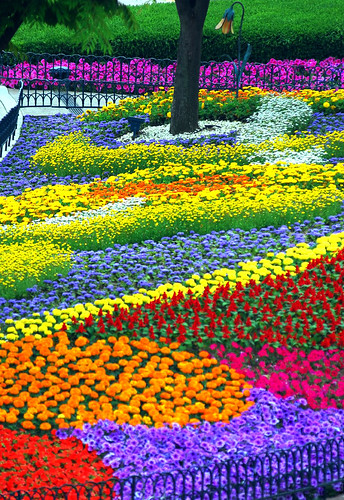
If you want a great day out spend the day at Orman Gardens, near Giza Zoo, Cairo and help Egypts struggling Gareden Centres post revolution.
From now until the middle of May, 9am till 8pm every day there is a huge Flower, Tree, and Landscaping Exhibition there in the Gardens.

You can spend the day wandering around looking and buying all the beautiful plants and trees and succulents and cactii, fruit trees, beautiful flowers and topiary, see honey being made by the bees in glass hives, buy goldfish, terrapin, budgies, koi carp, fish tanks, wander through landscaping exhibits, buy pottery, vases, pots, ceramics, Nubian and bdeouin handicrafts.

They exhibition is large with neatly spaced out rows to wander down. Everyone is very helpful and there are experts on hand to advise on planting etc. All kinds of tools, lawnmowers, fertilizers, composts, insecticides on sale. Herbs, flowers and trees of all descriptions and many unusual ones.

Wheelbarrow boys to cart your purchases for you to the car. Car parking is 5le and I'd advise you all to park inside trhe Gardens so it is easier to get your things back easily to the car although there is parking outside the gardens too. Right now the Lotus and Papyrus ponds have millions of tadpoles ( baby frogs ) swimming around them. Nice for the children to see.
Beautiful topiary on sale, tools, kiosks, and the sellers are very helpful without hassling you. You can wander around and look and buy in perfect peace.

Once you have loaded your car with plants and trees and stuff you can spend the afternoon sitting in the gardens under the tree shade and have a picnic.
It's a great way to help out the Egyptian Garden Centres and growers post revolution.
If you have a garden or balcony or just want to buy some nice house plants its the place to go. Prices are very good. All items were either normal what you would pay or below in the average garden centres.

Entrance is free, you just pay car parking at 5le.
Go along for the day and support our Egyptian Garden Centres and have a great day out till Mid May.
The Orman Gardens are right next to Giza Zoo, close to Cairo University in Giza. Car parking you use the main gate.
Have a great day out and help our Egyptian flower and tree growers.
From now until the middle of May, 9am till 8pm every day there is a huge Flower, Tree, and Landscaping Exhibition there in the Gardens.

You can spend the day wandering around looking and buying all the beautiful plants and trees and succulents and cactii, fruit trees, beautiful flowers and topiary, see honey being made by the bees in glass hives, buy goldfish, terrapin, budgies, koi carp, fish tanks, wander through landscaping exhibits, buy pottery, vases, pots, ceramics, Nubian and bdeouin handicrafts.

They exhibition is large with neatly spaced out rows to wander down. Everyone is very helpful and there are experts on hand to advise on planting etc. All kinds of tools, lawnmowers, fertilizers, composts, insecticides on sale. Herbs, flowers and trees of all descriptions and many unusual ones.

Wheelbarrow boys to cart your purchases for you to the car. Car parking is 5le and I'd advise you all to park inside trhe Gardens so it is easier to get your things back easily to the car although there is parking outside the gardens too. Right now the Lotus and Papyrus ponds have millions of tadpoles ( baby frogs ) swimming around them. Nice for the children to see.
Beautiful topiary on sale, tools, kiosks, and the sellers are very helpful without hassling you. You can wander around and look and buy in perfect peace.

Once you have loaded your car with plants and trees and stuff you can spend the afternoon sitting in the gardens under the tree shade and have a picnic.
It's a great way to help out the Egyptian Garden Centres and growers post revolution.
If you have a garden or balcony or just want to buy some nice house plants its the place to go. Prices are very good. All items were either normal what you would pay or below in the average garden centres.
Entrance is free, you just pay car parking at 5le.
Go along for the day and support our Egyptian Garden Centres and have a great day out till Mid May.
The Orman Gardens are right next to Giza Zoo, close to Cairo University in Giza. Car parking you use the main gate.
Have a great day out and help our Egyptian flower and tree growers.
Subscribe to:
Posts (Atom)